By Parth Parmar, mechanical design engineer · 120 pieces, 22 parts · Updated
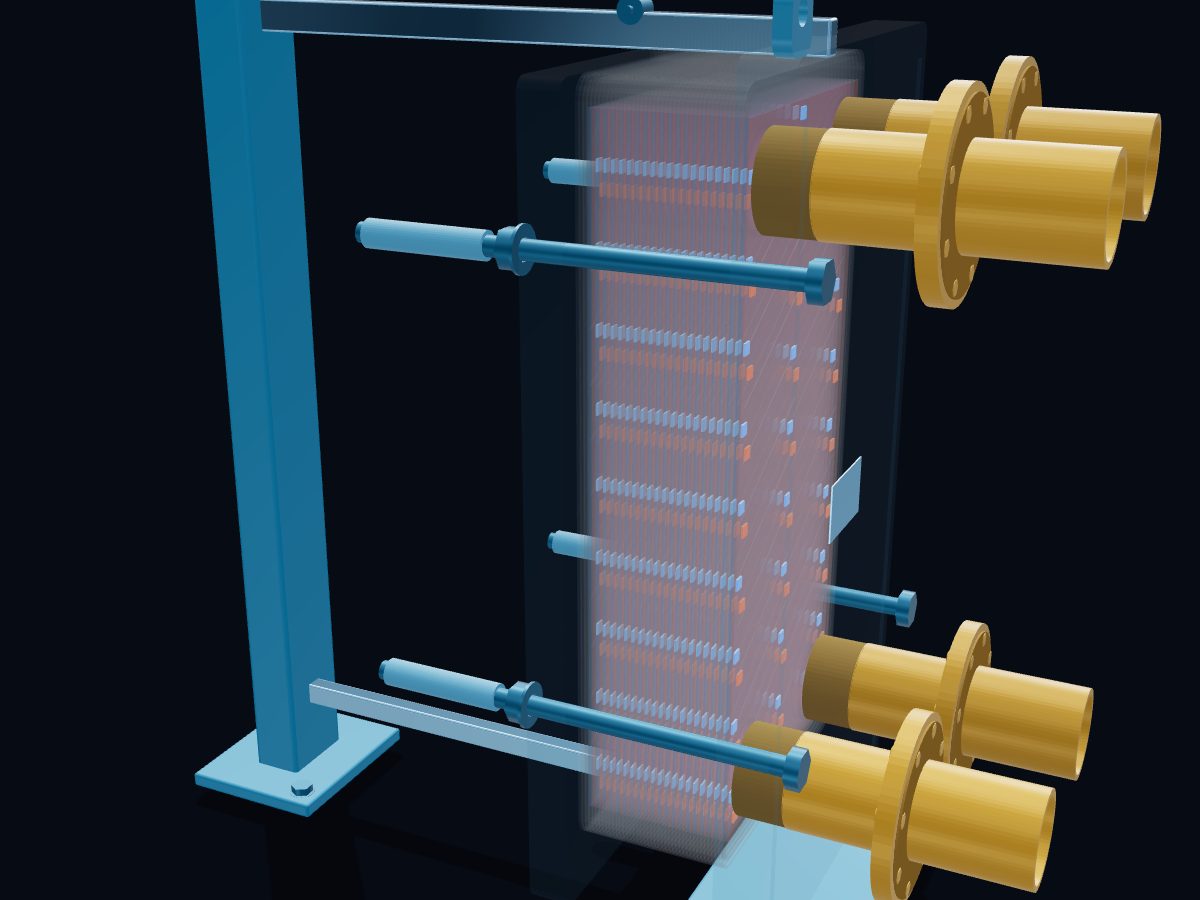
A plate heat exchanger passes heat from one liquid to another through a stack of thin corrugated metal plates. Gaskets turn the gaps between the plates into channels, and the hot and cold liquids flow through alternate channels, usually in opposite directions, so heat crosses every plate without the two liquids ever mixing.
Single parts: scroll to the parts list. These are learning models, not a print kit: some parts touch or overlap and there are no fit tolerances.
Free for personal and educational use under CC BY-NC 4.0. Credit “Engine-X by Parth Parmar (engx3d.com)” when you share or remix it. Don’t sell the files or prints. For commercial use, get in touch. Every file carries the Engine-X mark and a hidden digital fingerprint that identifies it.
Key facts
Machine
Gasketed, 41 plates · DN100 · countercurrent
Parts modeled
120 named parts in 4 systems (22 different parts to download)
Model size
1191 × 1143 × 510 mm (real scale)
Formats
GLB (glTF 2.0) 8.7 MB, STL 5.3 MB, USDZ for iPhone AR, ZIP of part STLs 0.2 MB
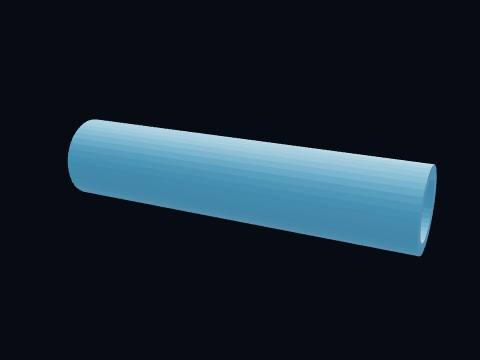
3 parts: 41 corrugated stainless steel plates with their gaskets.
Frame & bolts
13 parts: Frame plate, pressure plate, carrying and guiding bars, support column, tightening bolts and nuts.
Connections
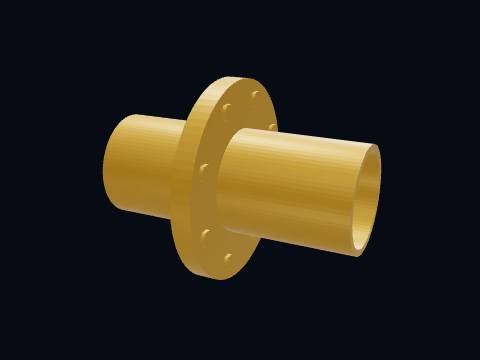
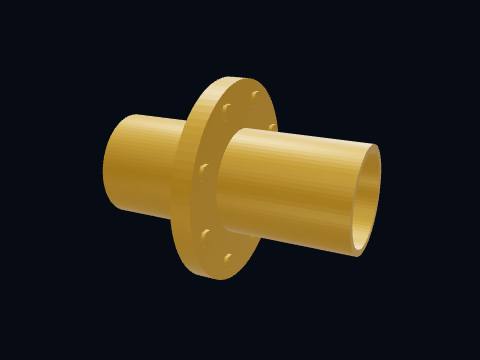
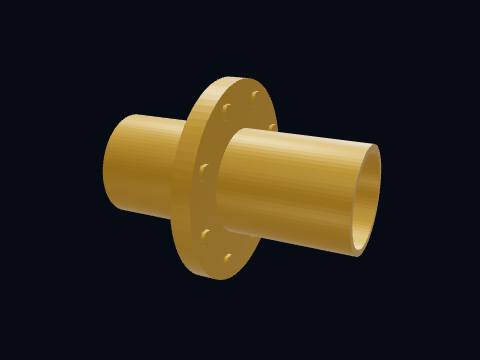
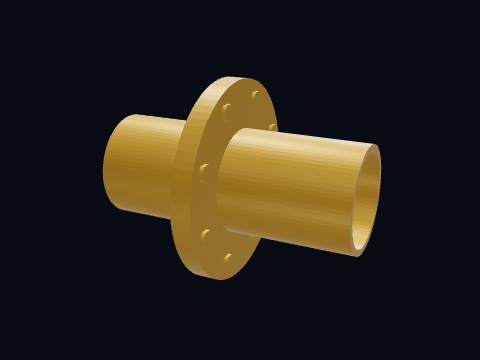
6 parts: Four DN100 flanged connections: hot in and out, cold in and out.
All 22 parts of the plate heat exchanger, one by one
Every part with a picture, what it does and its own STL file: start plate, heat transfer plate, end plate, frame plate, frame plate foot, pressure plate, pressure plate roller, carrying bar and more. Open any part in the live 3D atlas to see where it sits and how it moves. A part used several times (valves, bolts) is shown once with its count.
41 corrugated stainless steel plates with their gaskets.
Start plate
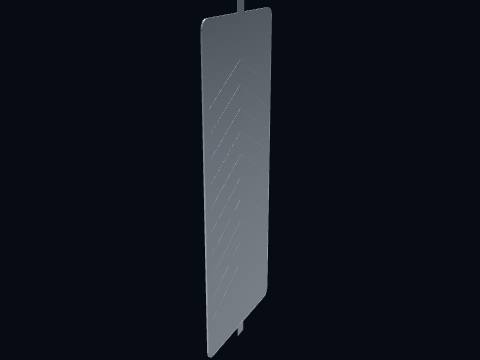
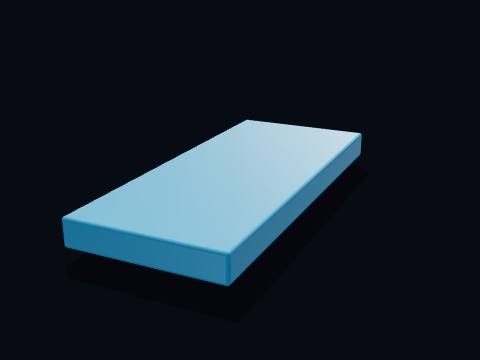
The start plate, the first plate against the frame plate. Its gasket seals against the frame plate itself, so no liquid touches the painted carbon steel; liquid only passes on its inner side.
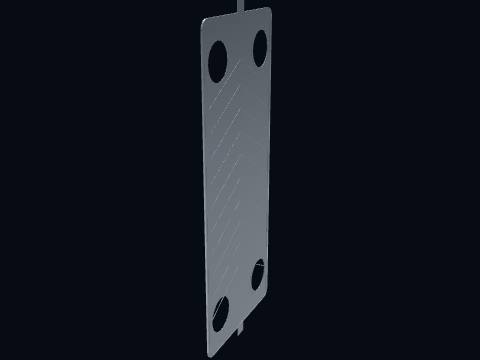
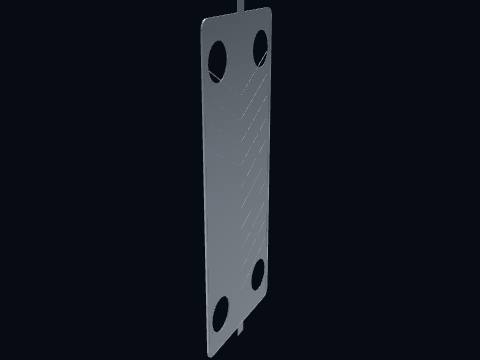
A heat transfer plate: thin pressed stainless steel, 400 × 900 mm in this model, with a port hole in each corner. Hot water flows on one side and cold water on the other, so heat passes straight through the sheet. The herringbone corrugations stiffen the plate and keep both streams turbulent, which is what makes plate exchangers transfer so much heat in so little space.
More about this part
Every second plate is turned 180°, so the chevrons of neighbouring plates cross and touch; the contact points hold the channel open against the pressure.
The elastomer gasket glued or clipped in its groove seals the channel and decides which two ports feed it: the other two are ring-sealed off.
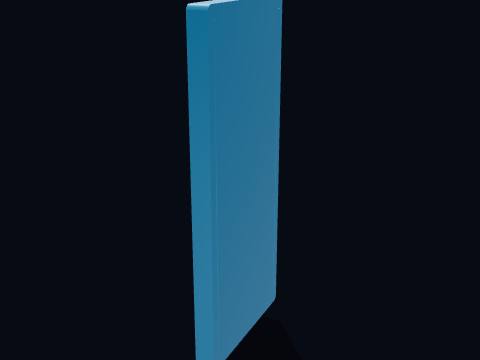
The end plate, the last plate against the pressure plate. With all four connections on the frame plate it has no port holes: it closes the four port tunnels at the far end.
Frame plate, pressure plate, carrying and guiding bars, support column, tightening bolts and nuts.
Frame plate
The frame plate (fixed plate), a thick painted steel plate bolted to the floor. All four pipe connections come through it, so the pipework never has to be moved to open the unit.
The pressure plate (movable plate) squeezes the plate pack against the frame plate. The tightening bolts pull it towards the frame plate to squeeze the plate pack until every gasket seals. To clean or add plates, it is rolled back along the carrying bar.
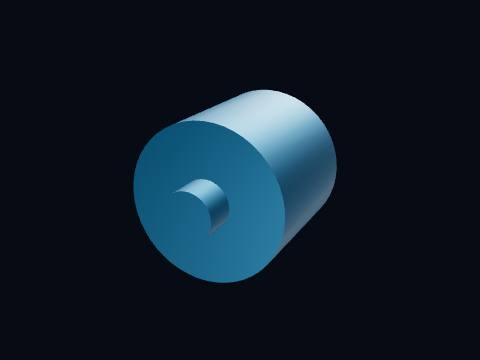
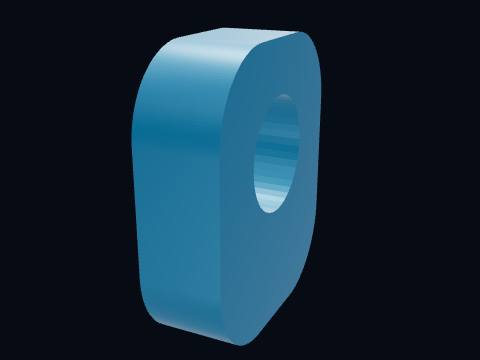
The pressure plate roller runs on the carrying bar. It hangs the pressure plate on the carrying bar, so the heavy plate can be rolled back by hand when the pack is opened.
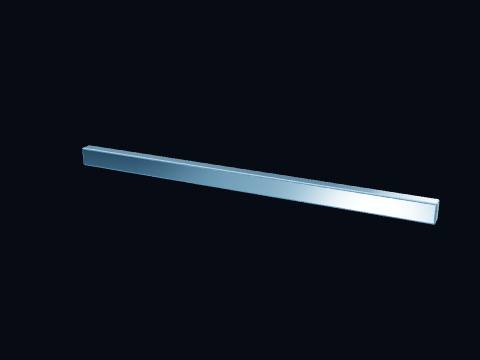
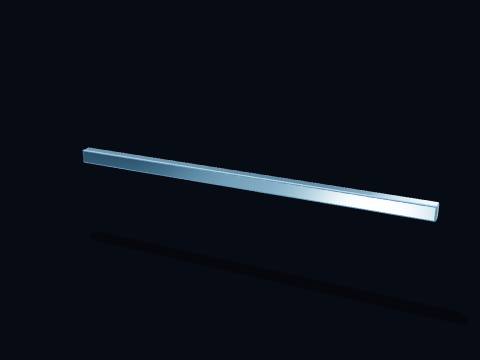
The carrying bar is the top rail the plates hang from. The plates and the pressure plate hang from it; it runs from the frame plate to the support column.
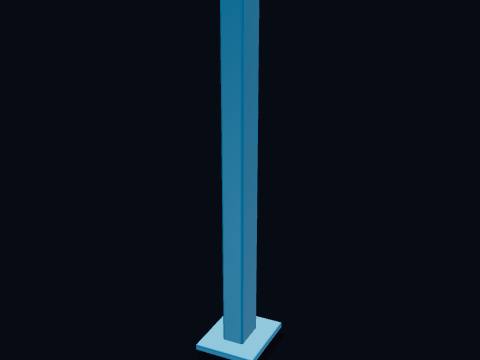
The support column stands at the far end of the frame. It carries the ends of the carrying and guiding bars and leaves room to slide the pressure plate back.
The nameplate is the data plate fixed to the frame. It records the design pressure and temperature and the tightening dimension the pack must be closed to.
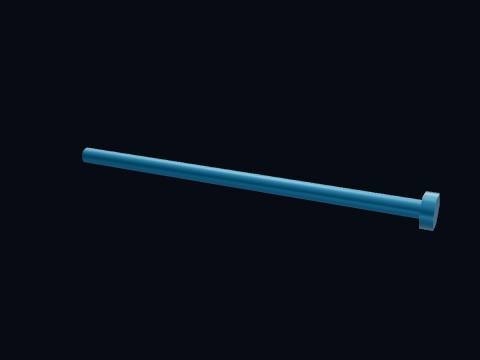
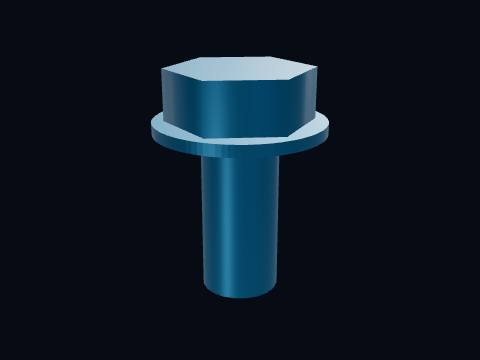
A tightening bolt pulls the pressure plate towards the frame plate. Together they hold the pack at its tightening dimension; they are tightened in diagonal pairs, a little at a time, so the pressure plate stays parallel to the frame plate.
More about this part
Never tighten below the minimum dimension on the nameplate: it can crush the plates.
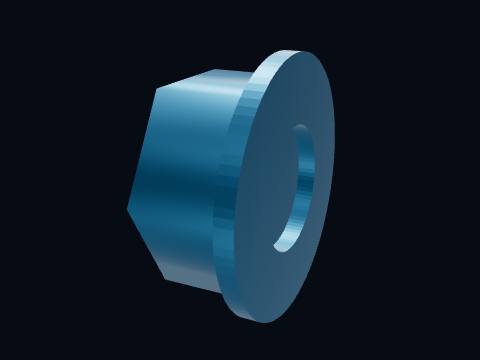
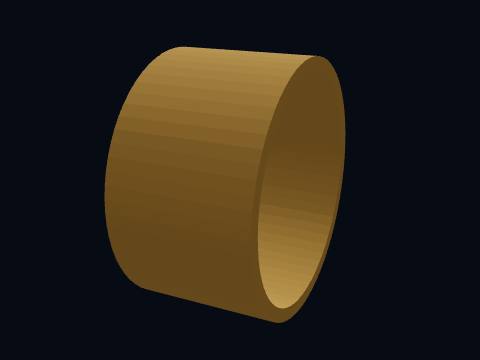
A tightening bolt cover is a plastic sleeve over the bolt thread. It keeps dirt off the exposed thread, so the nut still runs freely the next time the pack is opened.
Four DN100 flanged connections: hot in and out, cold in and out.
Hot water inlet (DN100)
The hot water inlet (top, DN100) is where the hot stream enters. Hot water enters the port tunnel formed by the lined-up port holes and spreads into every hot channel.
The cold water outlet (top, DN100) is where the heated cold stream leaves, at 60 °C in the example, hotter than the hot stream's 50 °C outlet: a temperature cross only countercurrent flow can give.
Is the plate heat exchanger 3D model free to download?
Yes. The plate heat exchanger 3D model is free for personal and educational use under CC BY-NC 4.0: credit "Engine-X by Parth Parmar (engx3d.com)". Selling the files or prints, or other commercial use, needs written permission.
Which file formats is the plate heat exchanger 3D model in?
GLB (glTF 2.0) with colours and named parts, STL in millimetres (Z-up) for CAD, slicers and 3D printing, USDZ for AR on iPhone, and a ZIP with all 22 parts as separate STL files.
How many parts does the plate heat exchanger 3D model have?
120 named pieces in 4 systems (plate pack, hot & cold water, frame & bolts, connections). Repeated pieces such as bolts are folded together, which leaves 22 different parts, each one downloadable on its own.
Can I 3D print the plate heat exchanger model?
Yes, download the STL (whole machine or single parts) and open it in your slicer. It is a learning model at real scale, not a print kit: some parts touch or overlap and there are no fit tolerances, so scale it and print parts one by one.
How do I see the plate heat exchanger in AR on my phone?
Tap "View in your room" on this page. Android opens Google Scene Viewer and iPhone opens AR Quick Look, both without an app, and you can place the model at real size on the floor or a table.
Can I see the plate heat exchanger working in 3D?
Yes. Tap "Play live 3D here" or open the Engine-X atlas (engx3d.com/atlas#m=phe): it runs in the browser with true motion, and you can explode it, cut it open and X-ray it.
How to credit or cite this model
Credit line: Plate heat exchanger 3D model, Engine-X by Parth Parmar (engx3d.com)
Citation: Parmar, P. (2026). Plate heat exchanger 3D model [3D model, CC BY-NC 4.0]. Engine-X. https://engx3d.com/3d-models/plate-heat-exchanger
Used this model?
For a class, a project, a print or a video? Tell us how it went. With your OK, we may feature your work here.
 Open full screen →
 View in your room · AR