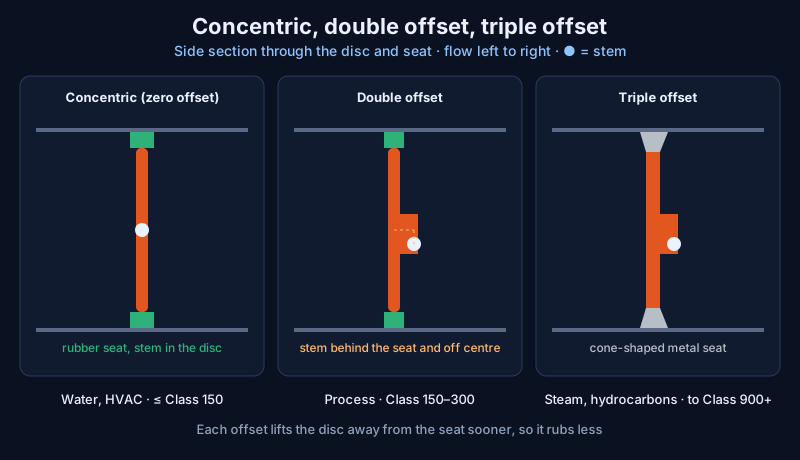
Concentric, double offset and triple offset butterfly valves differ in where the stem sits. A concentric valve has the stem through the disc centre and a rubber seat, for water and low pressure. A double offset moves the stem behind the seat and off centre for higher pressure. A triple offset adds a cone-shaped metal seat for steam and hydrocarbons.
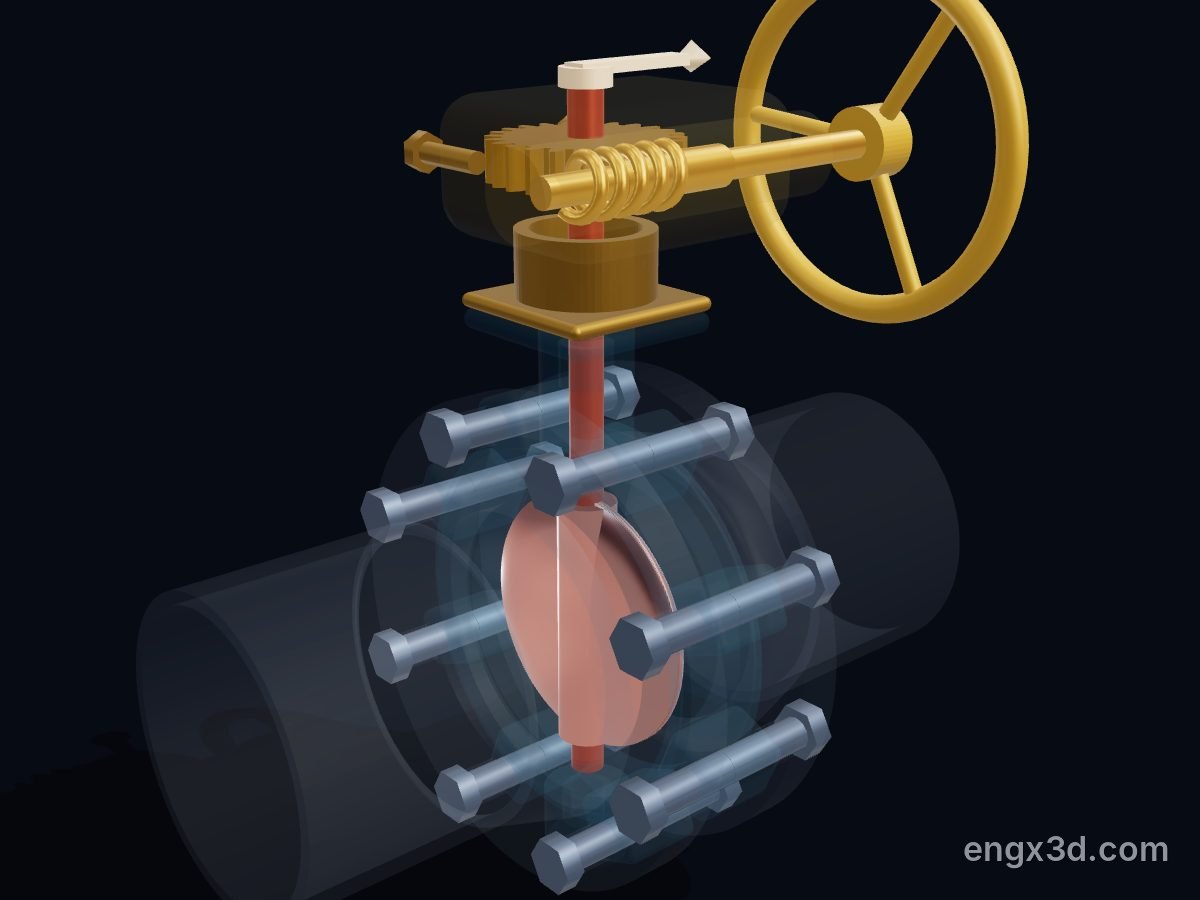
The new Engine-X butterfly valve 3D model is the first kind, a 6-inch concentric lug valve with a worm gear operator, and the butterfly valve guide explains how its disc, seat and gearbox work.
What is an "offset" in a butterfly valve?
An offset is a deliberate shift of the stem, or of the seat, away from the simple centred layout. In a concentric valve the stem runs through the centre of the disc and the bore, so the disc edge stays pressed into the seat as it turns (Project Materials).
Each offset moves the geometry so that the disc swings away from the seat sooner and rubs it less.
API 609, the butterfly valve standard, groups them in two categories (Project Materials):
- Category A: concentric, soft-seated valves for lower-pressure, lower-temperature service.
- Category B: double and triple offset valves for higher pressure service.
Concentric (zero offset): the everyday water valve
In a concentric valve the disc edge rubs the rubber seat through the whole stroke, so the seat is the part that wears fastest. Seats are elastomers such as EPDM, NBR or Viton, and the design is used for water, HVAC, fire protection and water treatment, up to about Class 150 and 120 °C (Project Materials).
Its strengths are size, cost and tight shut-off at low pressure. A 6-inch lug valve is only 56 mm face to face and is rated 200 psig both ways (Titan FCI). Keystone rates its resilient seat for drop-tight shut-off at the full 10 bar rating and gives the 6-inch size a flow of Cv 2790 fully open (Keystone).
Double offset: the disc cams away from the seat
A double offset valve has two offsets: the stem sits behind the plane of the seat, and it also sits off the pipe centre line. Together they act like a cam, lifting the disc off the seat early in opening and giving a wiping seal on closing (Project Materials).
Less rubbing means the seat lasts longer and can be either resilient or metal. Double offset valves suit cooling water, process water and moderate-pressure process duty from Class 150 to 300, at up to about 250 °C with resilient seats or 400 °C with metal seats (Project Materials).
Triple offset: metal to metal with no rubbing
The triple offset keeps both stem offsets and adds a third: the seating surface is a cone at an angle instead of a flat ring. The disc then touches the seat only at the very end of closing, so there is no rubbing during most of the stroke (Project Materials).
That allows metal seats, in materials such as Stellite, Inconel or stainless steel, with bubble-tight Class VI shut-off. Triple offset valves are used for hydrocarbons, steam and high-temperature process, from Class 150 to 900 and in some designs up to 1500, with metal seats rated to about 815 °C (Project Materials).
Concentric vs double vs triple offset compared
| Concentric | Double offset | Triple offset | |
|---|---|---|---|
| Stem position | Through the disc centre | Behind the seat and off centre | Behind and off centre |
| Seat | Rubber (EPDM, NBR, Viton) | Rubber or metal | Metal, cone shaped |
| Seat contact | Rubs the whole stroke | Lifts off early | Touches only at closing |
| Pressure class | Up to Class 150 | Class 150 to 300 | Class 150 to 900+ |
| Temperature | About 120 °C | About 250 °C soft, 400 °C metal | About 815 °C |
| Typical service | Water, HVAC, fire | Process and cooling water | Steam, hydrocarbons |
| API 609 | Category A | Category B | Category B |
Figures from Project Materials, which also warns that a concentric rubber-seated valve should not be used in hydrocarbon service above 200 °C, because the elastomer degrades.
How do you choose between them?
Start from the fluid, pressure and temperature, then choose the cheapest design that covers them. Clean water at low pressure is concentric territory.
Higher pressure, or a need for longer seat life, moves you to double offset. Hydrocarbons, steam, high temperature or a need for metal-to-metal bubble-tight shut-off call for triple offset. Above roughly 8 to 10 inches, any of them is usually fitted with a worm gearbox or an actuator rather than a lever (Project Materials).
For a valve that is fully open or fully shut and must leave a clear bore, compare the butterfly valve with the gate valve: far longer and slower to operate, but with nothing in the flow when open.
The engineering takeaway
Every butterfly valve is the same idea, a disc turned a quarter turn, but where the stem sits decides how the disc meets its seat. Concentric valves rub a rubber seat and serve water; each offset lifts the disc away sooner, until the triple offset closes metal on metal with no rubbing at all.