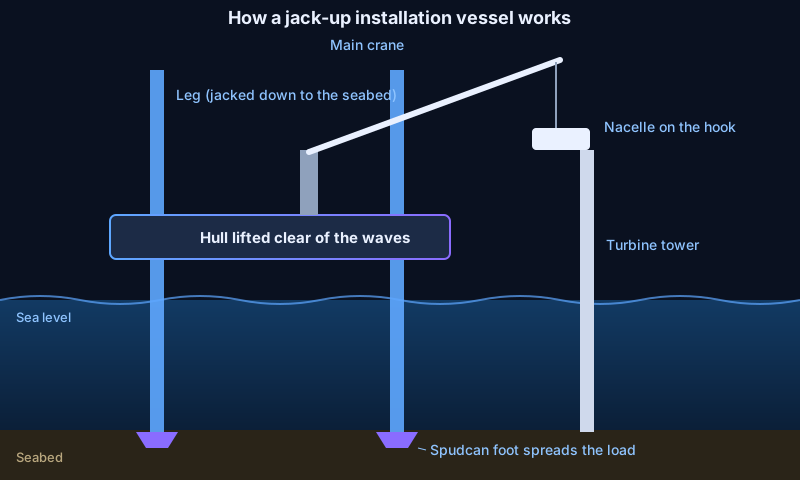
This week, Poland's first offshore wind farm reached a milestone: all 76 turbines at the 1.2 GW Baltic Power project are now standing. They were installed by two jack-up vessels, Wind Osprey and Wind Mover, operated by Cadeler. Each Vestas turbine is rated at 15 MW and stands more than 260 m tall.
Putting something that big on a foundation in open sea is not a crane job you can do from a normal ship. It needs a very specific machine.
Why can't a normal ship install an offshore wind turbine?
A normal ship can't do this job because it floats, so it moves — up and down with waves (heave), side to side (roll) and front to back (pitch). Lifting a very heavy nacelle and lowering it onto a tower top with centimetre accuracy is impossible if the crane itself is bobbing on the water.
How does a jack-up vessel install wind turbines?
A jack-up vessel installs turbines by standing on its own legs, turning itself into a temporary platform:
- Sail in like a ship. The legs are pulled up, so the vessel can travel to the site.
- Lower the legs. Usually four huge steel legs are driven down to the seabed by rack-and-pinion jacking systems — long toothed racks on the legs, driven by many electric motors and gearboxes.
- Pre-load. The vessel pushes down hard to make sure the feet (called spudcans) are firmly seated and won't sink further during the lift.
- Jack the hull up. The same motors now lift the whole hull out of the water, above wave height. The vessel is now a stable steel platform.
- Lift. With nothing moving, the main crane can place tower sections, the nacelle and the blades precisely.
When the turbine is done, the process runs in reverse and the vessel moves to the next foundation.
What is a CSOV in offshore wind?
A CSOV (commissioning service operation vessel) is a ship that carries technicians and spare parts to keep a wind farm running, because building the farm is only the start — it has to be maintained for decades. Several new ones were in the news this week:
- Acta Marine named Acta Hercules, the second of four new CSOVs, which runs on methanol dual-fuel engines, and has received the third, Acta Aquarius.
- Marco Polo Marine's "CSOV Plus", built at its own yard in Batam, Indonesia, carries a battery system of over 1 MWh, designed to be expandable to around 20 MWh for fully electric sailing.
- IWS Fleet ordered four more Skywalker-class CSOVs, with MacGregor supplying 3D motion-compensated cranes and gangways.
What is a motion-compensated gangway?
A motion-compensated gangway is a walkway from the ship to the turbine that stays still while the ship moves under it. Sensors measure the vessel's heave, roll and pitch many times per second, and hydraulic or electric actuators move the gangway in the opposite direction.
The result: a technician can walk from a rolling ship onto a turbine platform as if crossing a bridge.
It's the same idea as noise-cancelling headphones — measure the disturbance, then apply an equal and opposite motion.
The engineering takeaway
Offshore wind is turning shipyards into machine builders. Jacking systems, heavy-lift cranes, hybrid power plants and active motion control are all mechanical and control-engineering problems — the same families of gears, hydraulics and drives you'll find in any workshop, just scaled up to sea. To see that family of gears up close, explore a helical gear reducer in 3D: a fast motor turning slow, high-torque output is the same idea that drives the pinions climbing a jack-up vessel's legs.
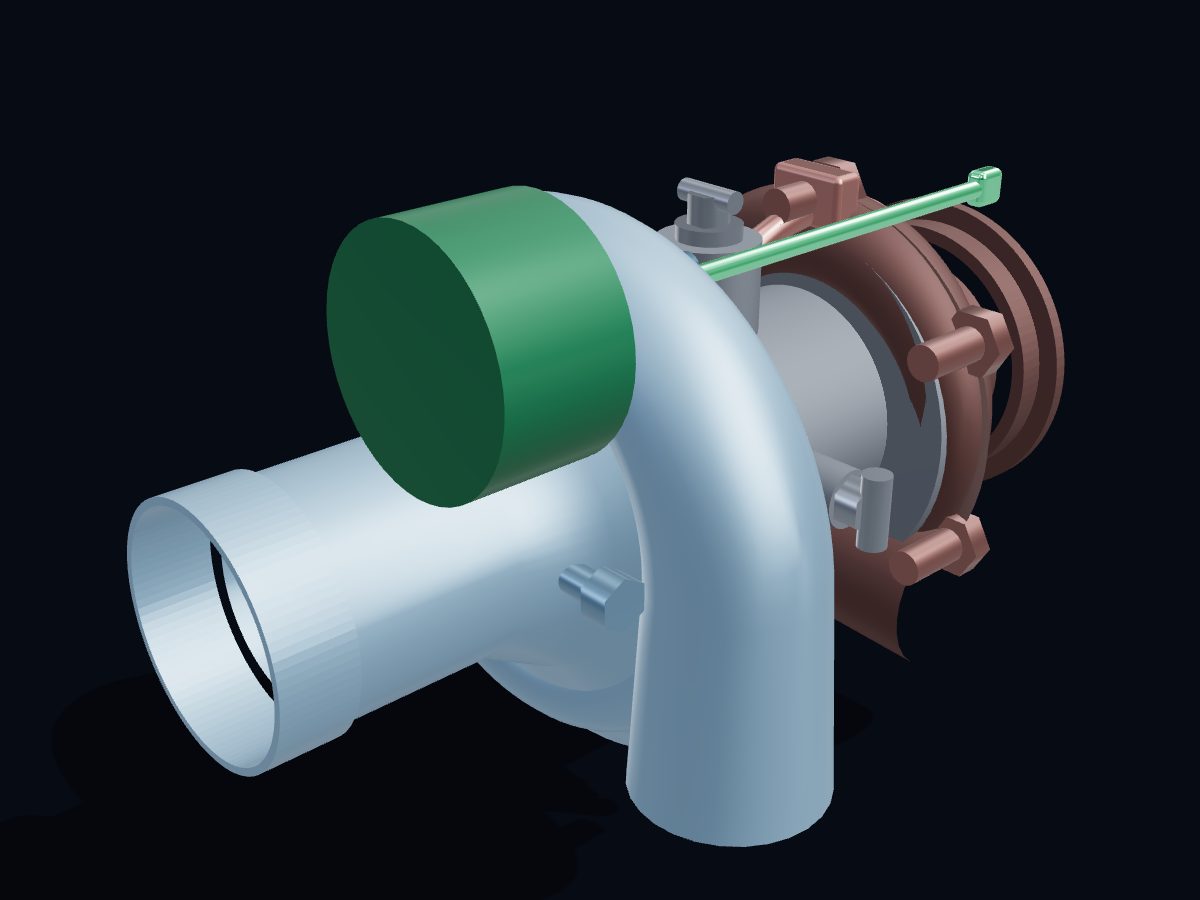 Turbocharger
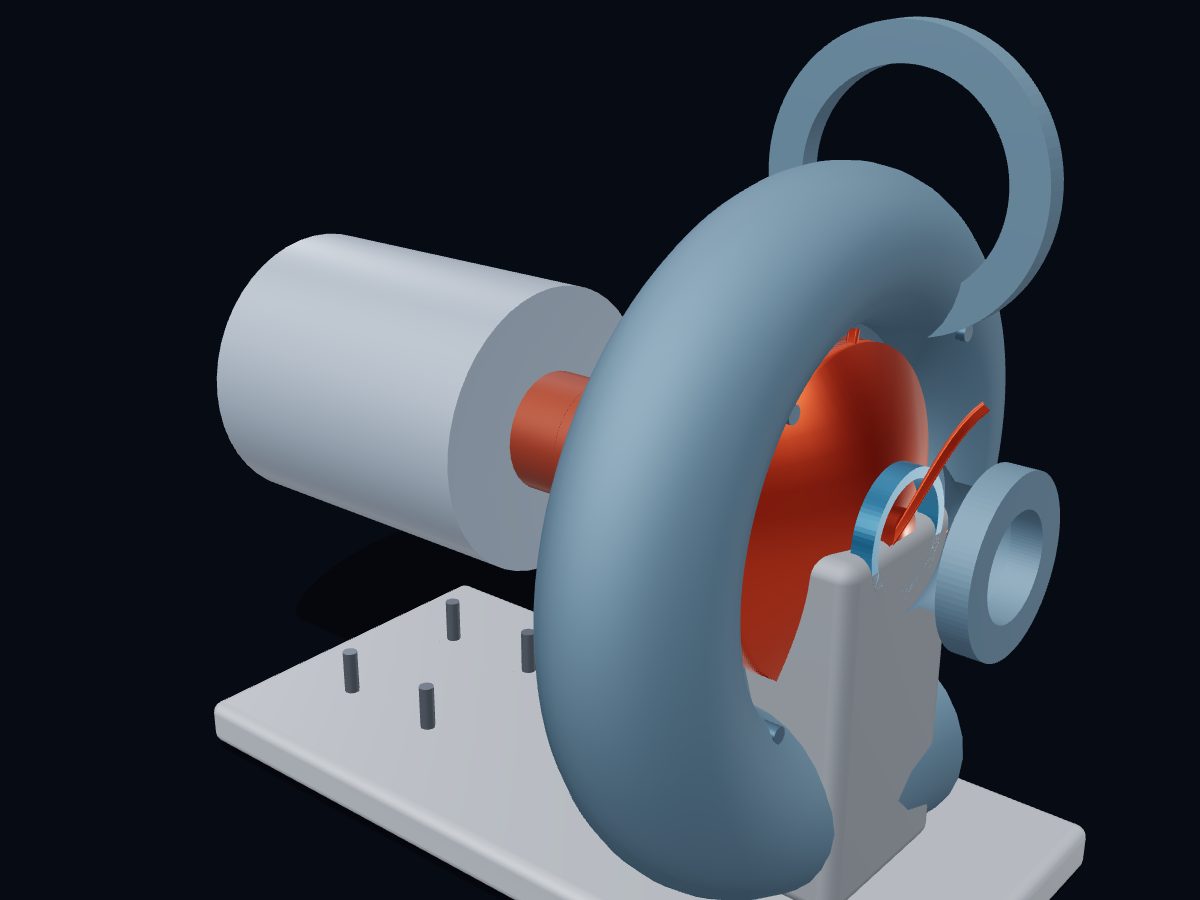 Centrifugal Pump
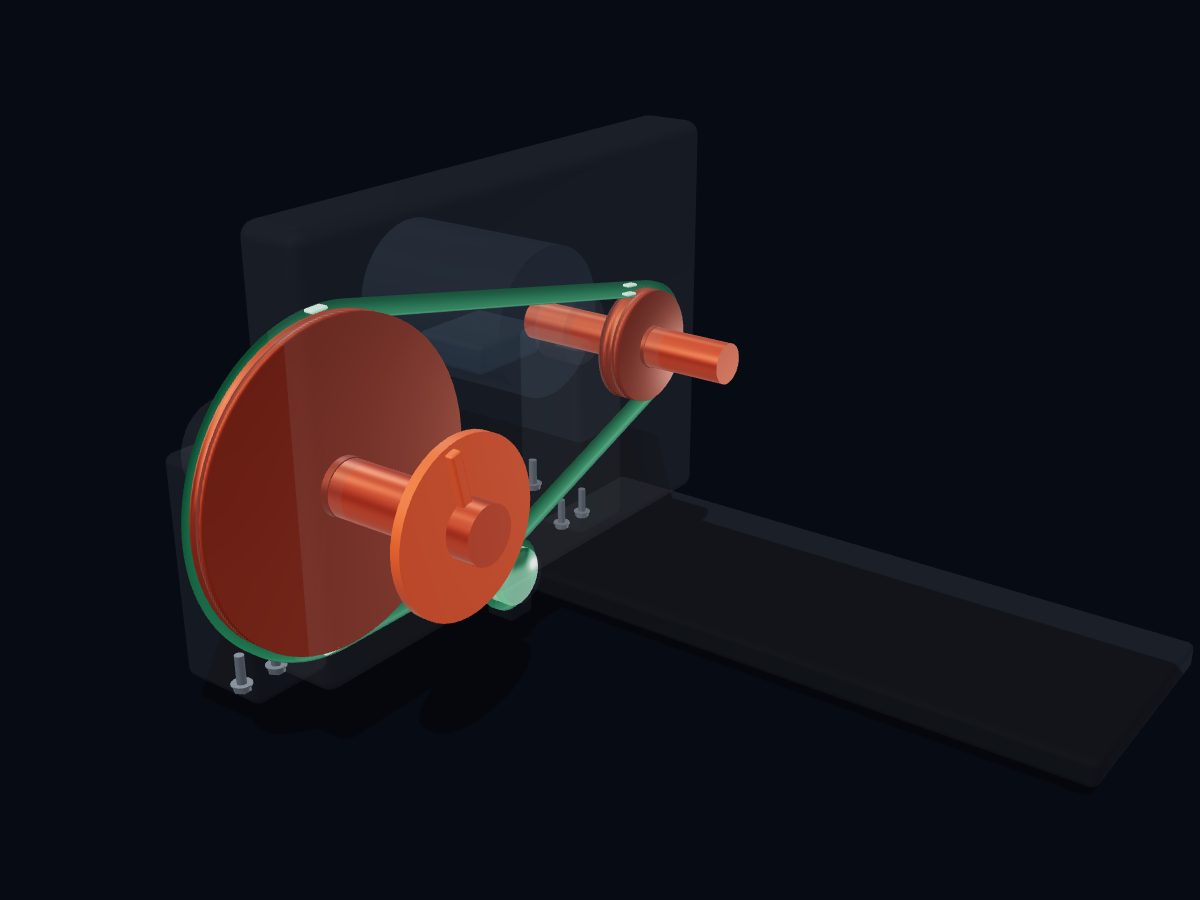 V-Belt Pulley Drive
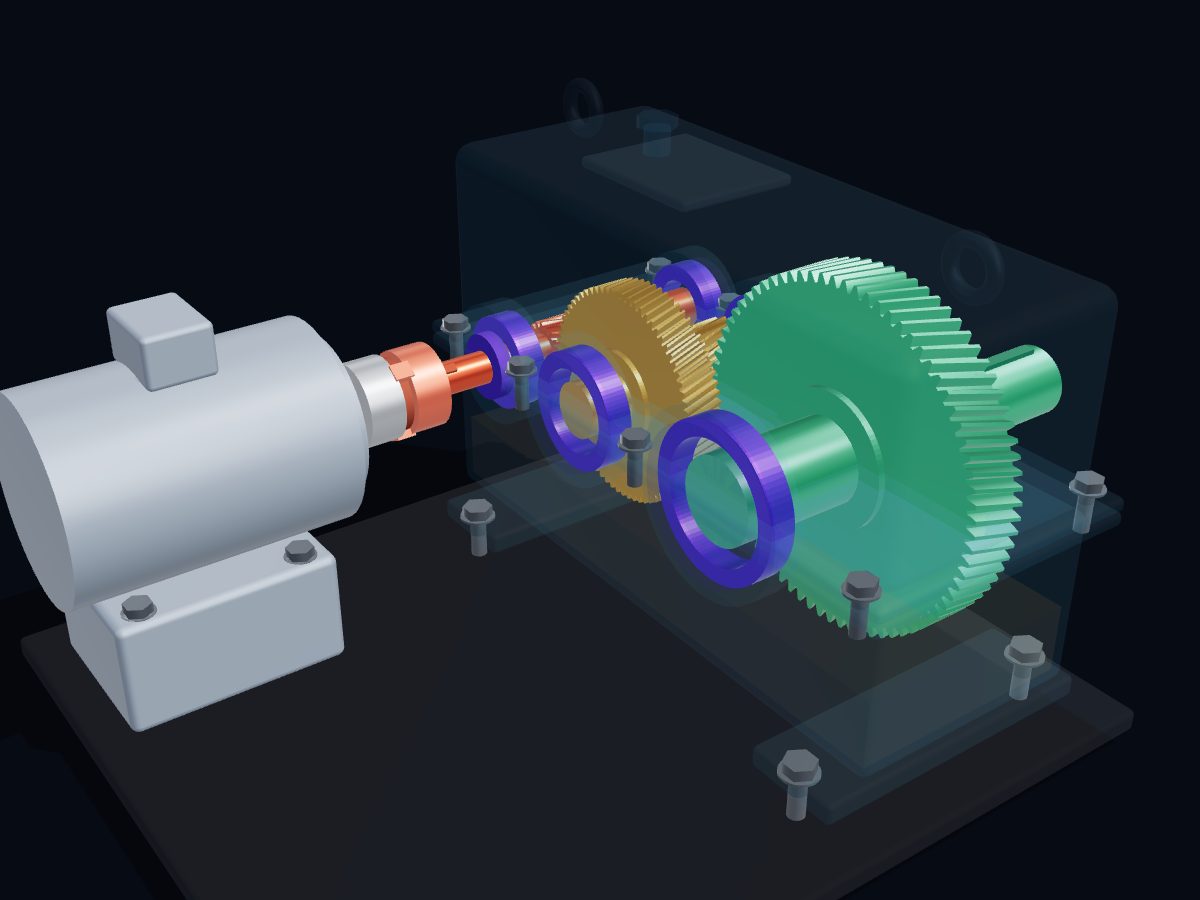 Helical Gear Reducer
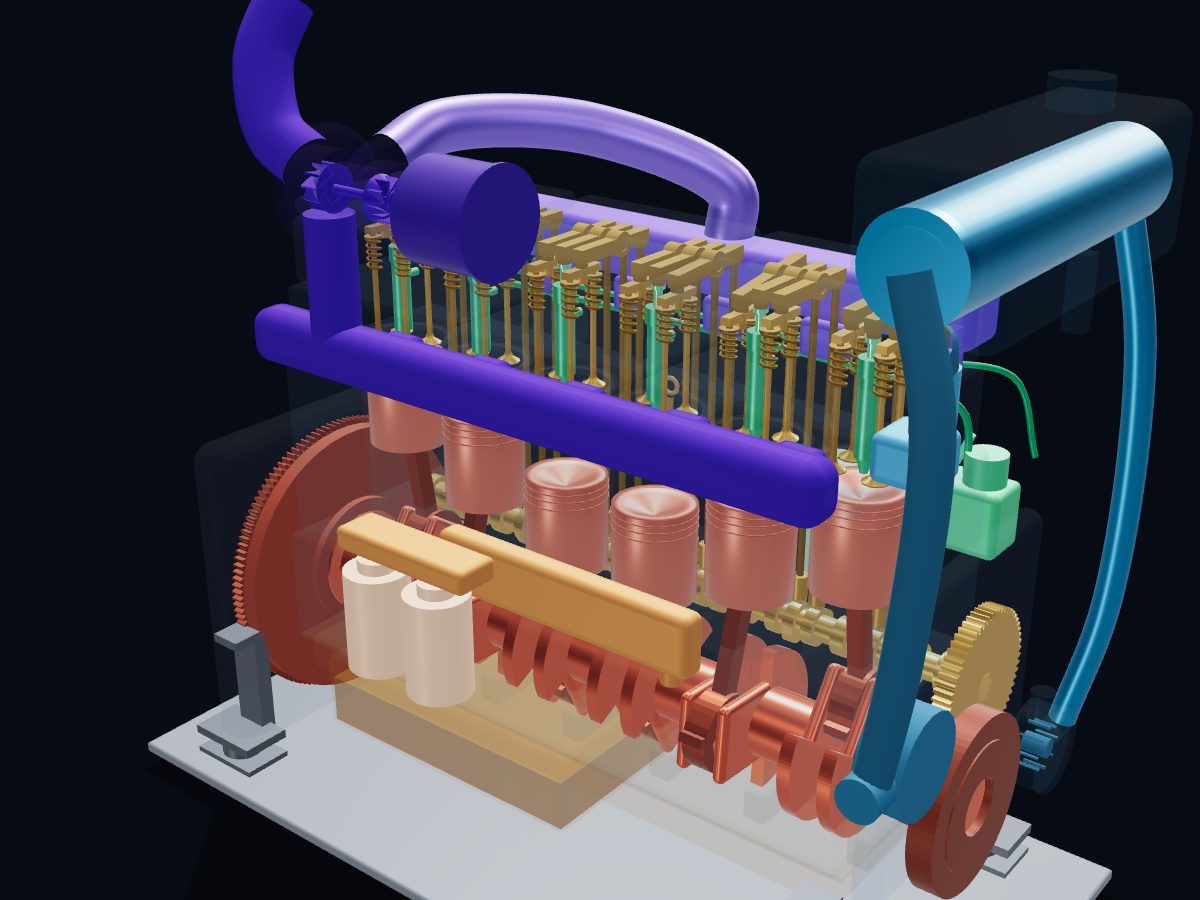 Marine Diesel Engine
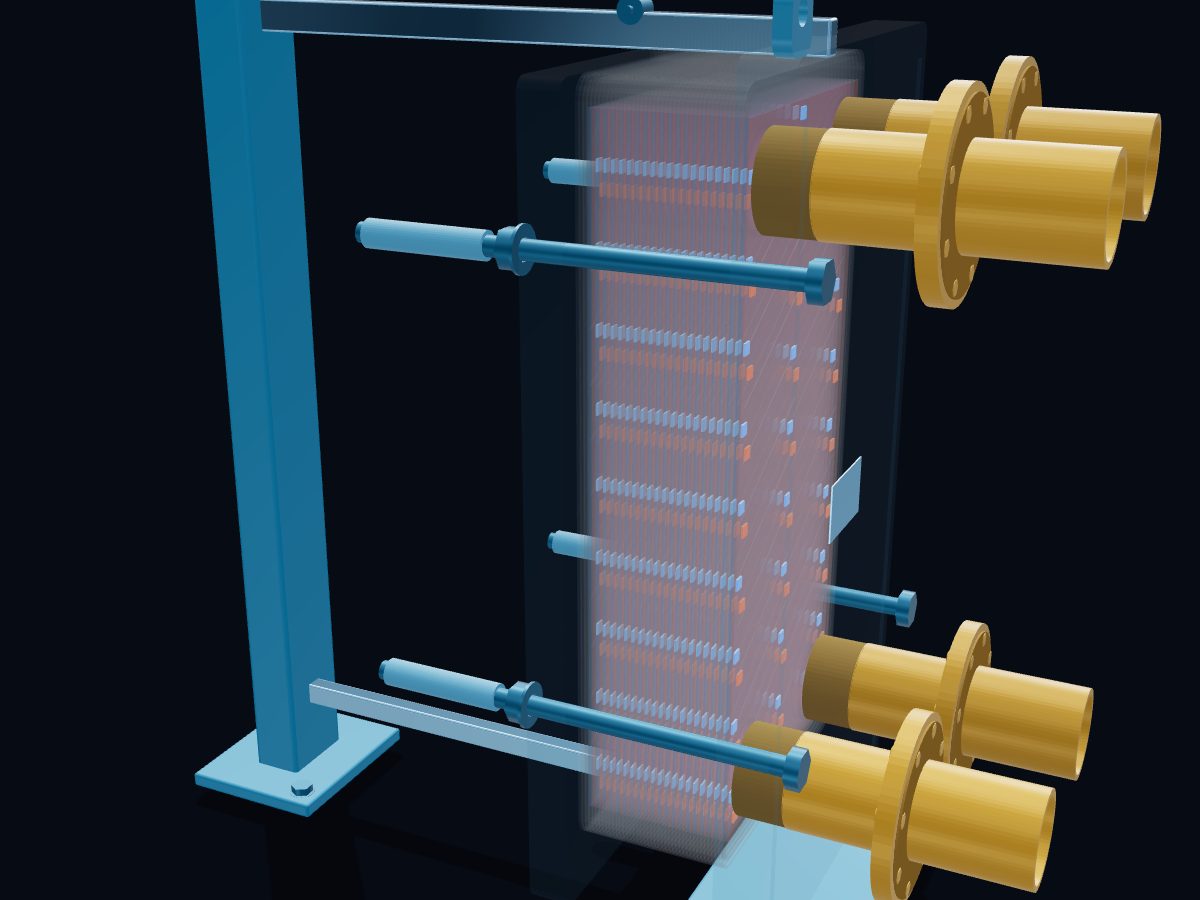 Plate Heat Exchanger
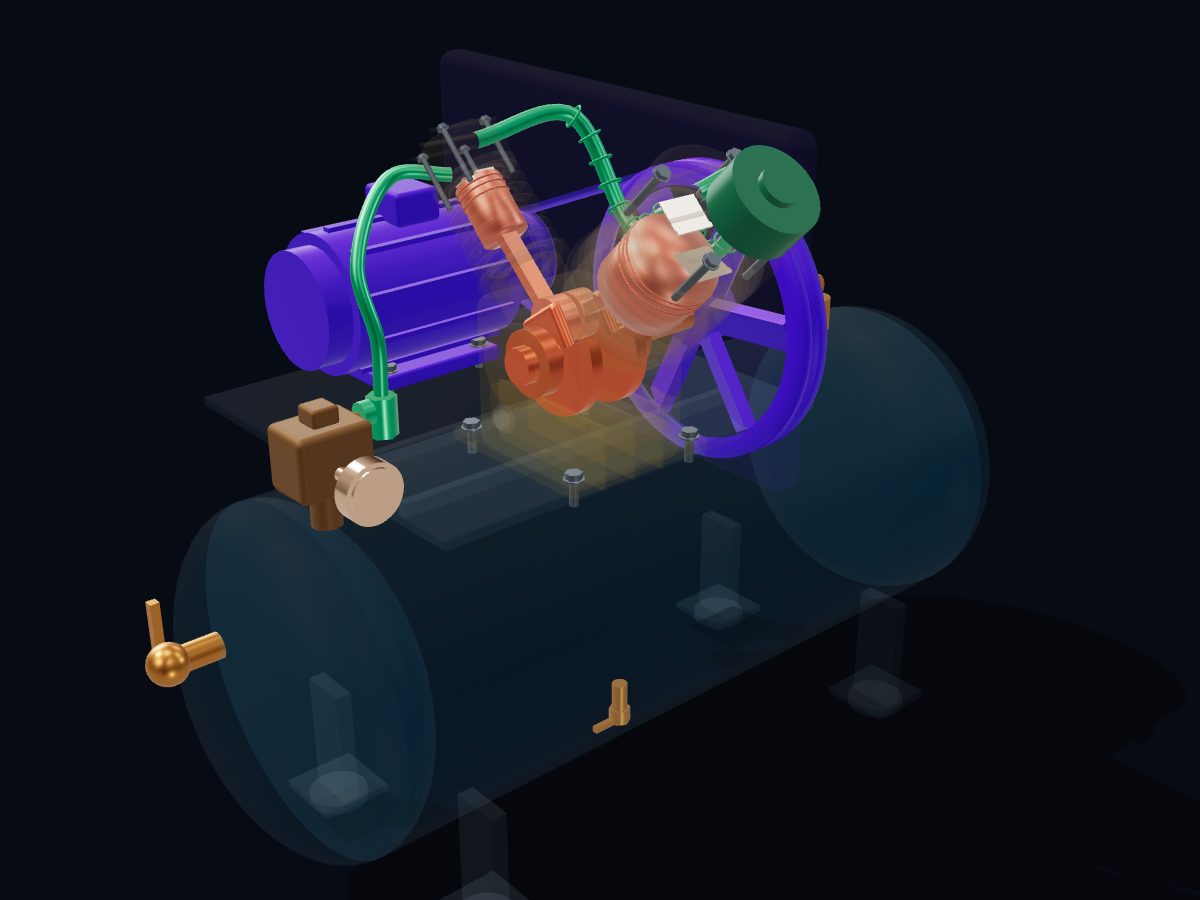 Reciprocating Air Compressor
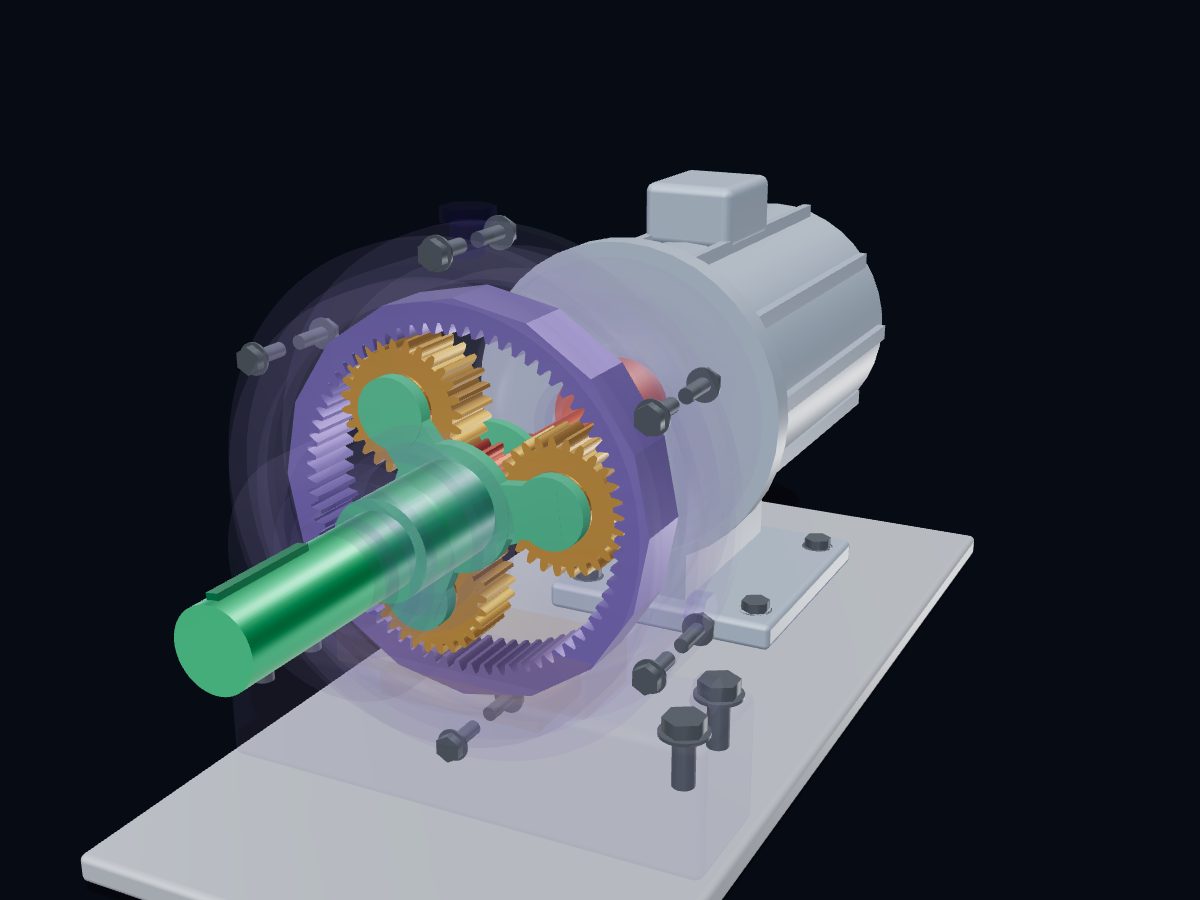 Planetary Gearbox