This week, inspection-robot company Gecko Robotics announced it is partnering with defence manufacturer Anduril to speed up US submarine production. Gecko's robots and software will be used at Anduril's new 160,000 sq ft factory in California, where key submarine components will be made.
Anduril has tied the work to a $3.7 billion investment in Virginia-class submarine production, including a new shipyard in Maryland.
The headline number: on forged components for other defence customers, Gecko says its system has cut inspection time by up to 90%, and that workers with no prior non-destructive testing (NDT) experience can be productive after about an hour of training.
As someone who works in a dry dock, that second claim is the interesting one. Here's why.
Why is ship inspection so slow?
Ship inspection is slow because every critical steel part on a ship — plates, welds, forgings, tanks — has to be checked before it goes into service and again throughout its life. The checks are non-destructive: you test the part without cutting it open.
The problem isn't the physics. It's people and time:
- A large hull has thousands of square metres of plate and kilometres of weld.
- Manual inspection means an inspector, a hand probe and a grid drawn on the steel, point by point.
- Qualified NDT technicians take a long time to train and certify, and there aren't enough of them.
If inspection can't keep up with fabrication, the whole yard waits.
How does ultrasonic thickness gauging work?
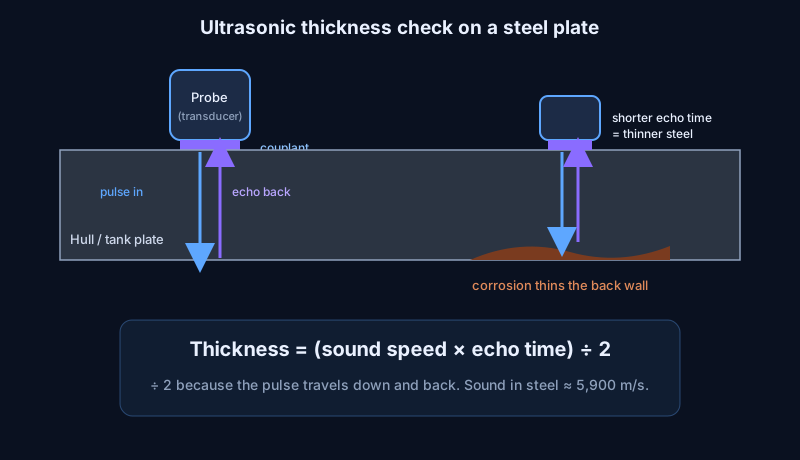
Ultrasonic thickness gauging is the most common check on a hull, and it works on simple physics:
- A probe (transducer) is placed on the steel with a gel or water film called couplant so the sound can get in.
- It sends a very short, high-frequency sound pulse into the plate.
- The pulse reflects off the far side (the "back wall") and returns to the probe.
- The instrument times the round trip. Since sound travels through steel at roughly 5,900 m/s, thickness = speed × time ÷ 2 (÷ 2 because the pulse goes there and back).
When corrosion eats the inside of a tank or the outside of the hull, the back wall moves closer. The echo comes back sooner, and the reading drops. Compare that to the original plate thickness and you know how much metal has been lost — and whether the plate needs renewing.
What do inspection robots change?
A robot doesn't change the physics. It changes how much steel you can cover and how consistently:
- Coverage. Instead of spot readings on a grid, a crawler can take continuous readings along a surface, so a small thin patch between grid points isn't missed.
- Consistency. The robot holds the probe at the same angle and pressure every time, which removes a lot of operator variation.
- Data, not paper. Every reading is stored with its exact location. Gecko feeds this into what it calls a "digital thread" that follows a part from manufacture through decades of service.
- Planning repairs early. In its US Navy work, Gecko builds digital models of a ship's structural condition so repairs can be planned and parts ordered before the ship arrives in dry dock.
That last point matters a lot in my world. A ship in dry dock is costing money every day. Knowing which plates need cutting out before the ship arrives saves days of opening up and measuring.
The engineering takeaway
NDT is one of the least glamorous parts of building and maintaining ships, but it's often the slowest. Automating it doesn't replace the engineer's judgement — someone still has to decide what a thin reading means and how to repair it — but it turns inspection from a manual bottleneck into a data stream. For yards facing a shortage of skilled workers, that's the real story. For the other NDT methods used on ship steel, see welding types and NDT inspection, and for where this inspection data is put to work, read what happens when a ship is dry docked.
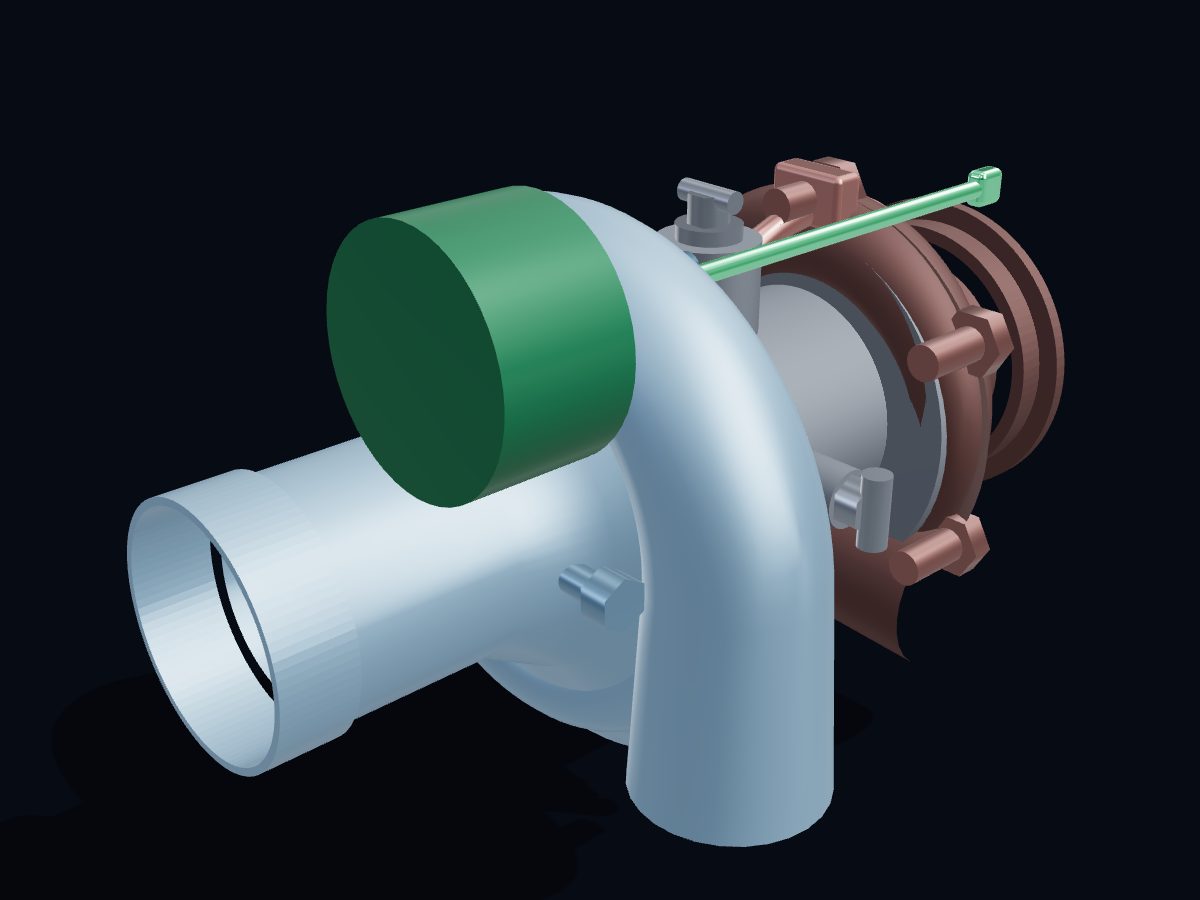 Turbocharger
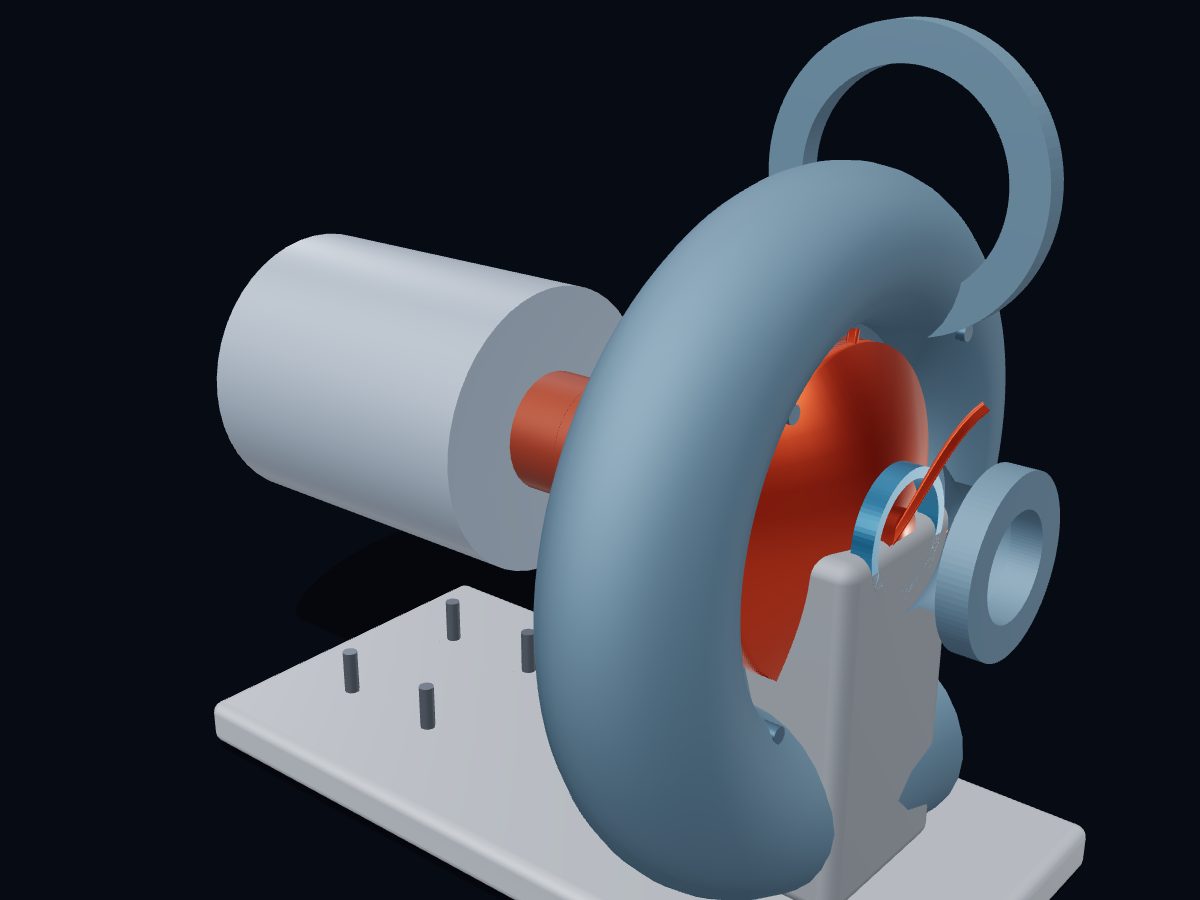 Centrifugal Pump
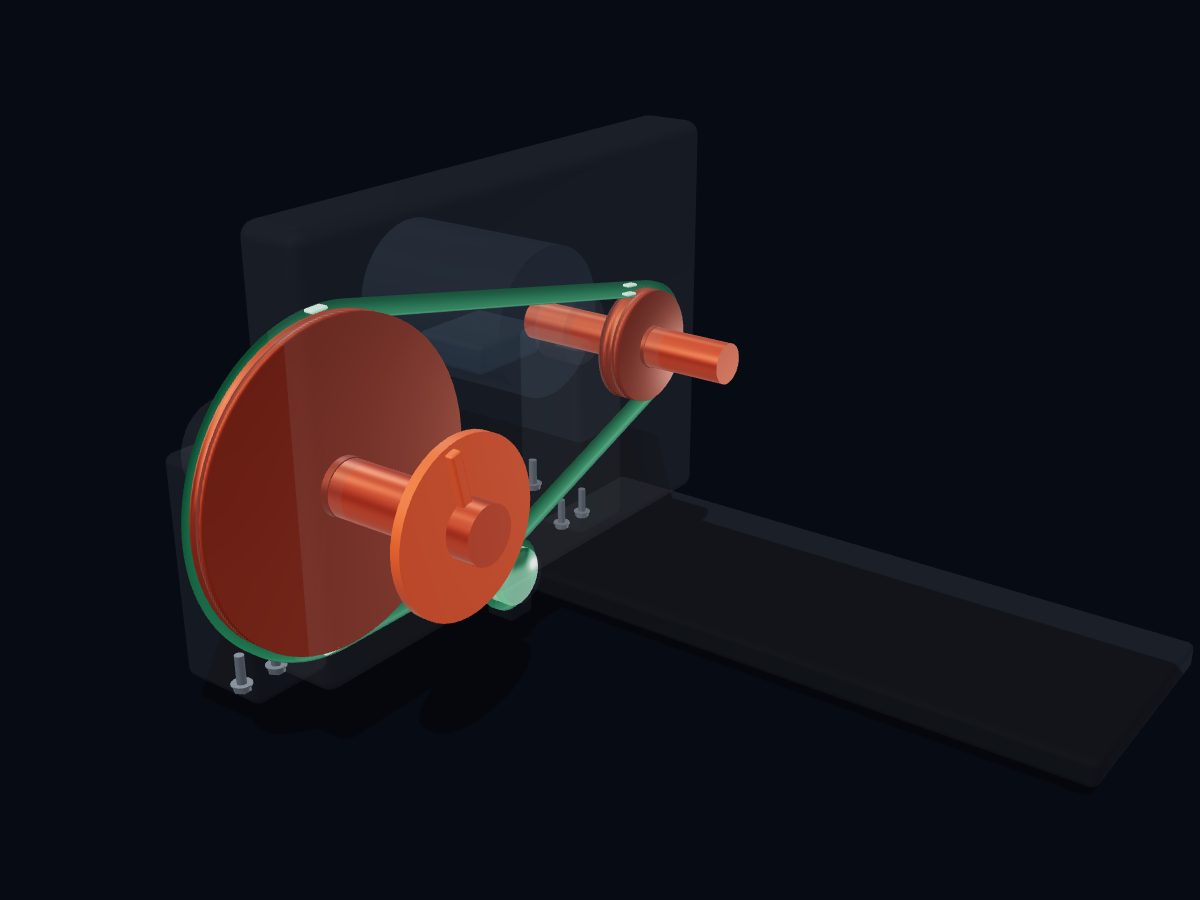 V-Belt Pulley Drive
 Helical Gear Reducer
 Marine Diesel Engine
 Plate Heat Exchanger
 Reciprocating Air Compressor
 Planetary Gearbox