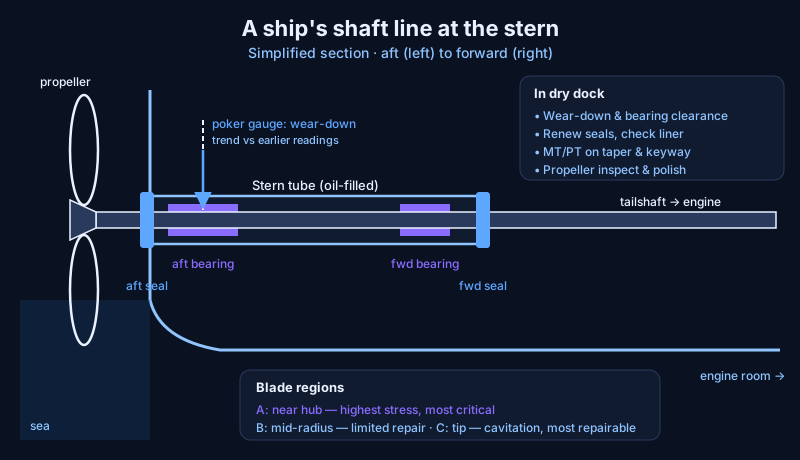
A ship's stern tube is the tube through the hull at the stern that carries the propeller shaft on bearings, holds the lubricant around them, and seals the sea out.
Together with the propeller and the tailshaft (the aftmost length of propeller shaft), it forms the shaft line that turns the engine's power into thrust — and it is one of the most important things inspected when a ship comes into dry dock.
The shaft line can only be fully reached with the ship out of the water, so its checks are planned into every dry docking. On a large ship the propeller is driven directly by a slow two-stroke engine, so every horsepower of that engine passes through this one shaft.
What are the parts of a ship's shaft line?
A ship's shaft line runs from the engine to the propeller. Working from aft to forward, the main parts are:
- Propeller — fitted on a tapered end of the tailshaft and held by a large nut; often keyed or shrink-fitted.
- Tailshaft (propeller shaft) — the shaft section that passes through the stern tube.
- Aft seal — at the outboard end of the stern tube, keeping sea water out and lubricant in.
- Stern tube bearings — usually an aft and a forward bearing that support the shaft's weight and the overhung load of the propeller.
- Forward seal — at the inboard end, stopping lubricant leaking into the engine room.
- Intermediate shafts and bearings — carrying the drive forward to the engine coupling.
Lagersmit, a stern tube and seal maker, notes that oil-lubricated stern tubes are the most common, with water- or grease-lubricated systems used where owners require them. The surrounding sea water usually cools the oil; where it cannot, an external lube oil unit circulates and cools it and helps separate any water that has got in.
Why is the aft stern tube bearing so important?
The aft stern tube bearing is the most heavily loaded bearing in the shaft line, because it carries the overhung weight of the propeller hanging off the end of the shaft.
The propeller on a large ship can weigh many tonnes, and it sits just aft of this bearing, so the bearing sees both the static weight and the fluctuating loads from the blades as they turn through the uneven flow behind the hull.
If the shaft is misaligned, the load concentrates on one edge of the bearing. Marine Inspection lists the result: uneven bearing loads, local heating and faster wear. Uneven wear in the bush or seal area is itself a sign of misalignment.
How is stern tube bearing wear measured?
Stern tube bearing wear is measured as wear-down: how far the shaft has dropped at the aft bearing as the bearing lining wears. The usual tool is a poker gauge — a calibrated rod passed through a fitting to measure the gap between the shaft and a fixed reference point.
Marine Inspection explains that the reading is meaningful mainly as a trend: each reading is compared with earlier ones, and with the original value, to see how fast the bearing is wearing.
When the bearing is exposed, clearances are also checked directly with feeler gauges and compared with the maker's original clearance and the maximum wear allowed by class rules. A sudden jump in wear-down, or a clearance near the limit, means the bearing needs attention before the ship sails again.
What is checked in a tailshaft survey?
A tailshaft survey checks that the shaft, its bearings, seals and propeller fit are sound. Marine Inspection notes that class rules have historically required the tailshaft to be withdrawn every 5 years, and that condition-monitoring notations — using sensors, lubricant analysis and alignment monitoring — can extend or replace the fixed withdrawal interval.
The Australian Maritime Safety Authority lists the core checks for shaft surveys on vessels it regulates:
- Visual inspection, followed by dye penetrant or magnetic particle testing of suspicious areas such as the keyway and taper, where fatigue cracks start.
- Precision measurement of diameter, taper and straightness.
- Taper bluing — checking the contact between the shaft taper and the propeller bore — when mating parts have changed.
- Bearing clearances, couplings and the stern tube seals.
- A running check where possible: vibration, hot bearings or leaking glands can point to misalignment or a loose propeller.
Marine Inspection adds that class rules allow a limited reduction in shaft diameter when cracks are machined out — it cites up to 3%, which costs roughly 10% of torsional strength — so repairs are always checked against the rules. The crack-testing methods are the same NDT methods used on welds.
Why are stern tube seals renewed in dry dock?
Stern tube seals are renewed in dry dock because they wear continuously against a turning shaft liner, and the aft seal can only be fully reached with the ship out of the water. Marine Inspection gives a typical seal service life of 2–5 years and notes that seals are usually replaced at each docking.
A failing aft seal lets sea water into the oil, which damages the bearings; a failing seal can also let oil out into the sea, which is both an environmental and a regulatory problem.
During the job, the shaft liner under the seal lips is inspected for grooves and cracks. Marine Inspection notes that a liner crack that goes right through needs the liner renewed, while surface cracks can be machined out if the liner stays within wear limits.
How is a ship's propeller inspected and maintained?
A ship's propeller is inspected for cracks, cavitation erosion, bent or damaged edges and roughness, then polished. Marine Inspection describes three blade regions used to judge repairs:
| Blade region | Where | Repair approach |
|---|---|---|
| A | Inner blade, near the hub | Highest stress — cracks usually need expert assessment and are often not repairable |
| B | Mid-radius | Limited repairs: machining out minor cracks, qualified welding, straightening |
| C | Outer blade and tip | Most cavitation exposure but most repair latitude; minor erosion and nicks can be dressed |
Polishing matters for fuel. Marine Inspection estimates that a fouled propeller can use 5–8% more fuel and that polishing a moderately fouled one typically saves 3–8% — figures it gives as indicative, but they explain why propellers are polished at every docking and often underwater between dockings.
The engineering takeaway
The shaft line is simple in principle — a shaft, two bearings, two seals and a propeller — but it carries all of the engine's power through a hole in the hull below the waterline. Dry dock is the chance to measure what has worn (wear-down, clearances, liners), renew what wears out (seals), crack-test what can fail suddenly (taper and keyway), and restore the propeller surface. Trending the readings from docking to docking is what turns one inspection into early warning. The same ideas apply on a smaller scale to any rotating machine: support it on the right bearings, keep it aligned, and seal it properly. The power this shaft carries comes from the main engine: explore a marine diesel engine in 3D, part by part.
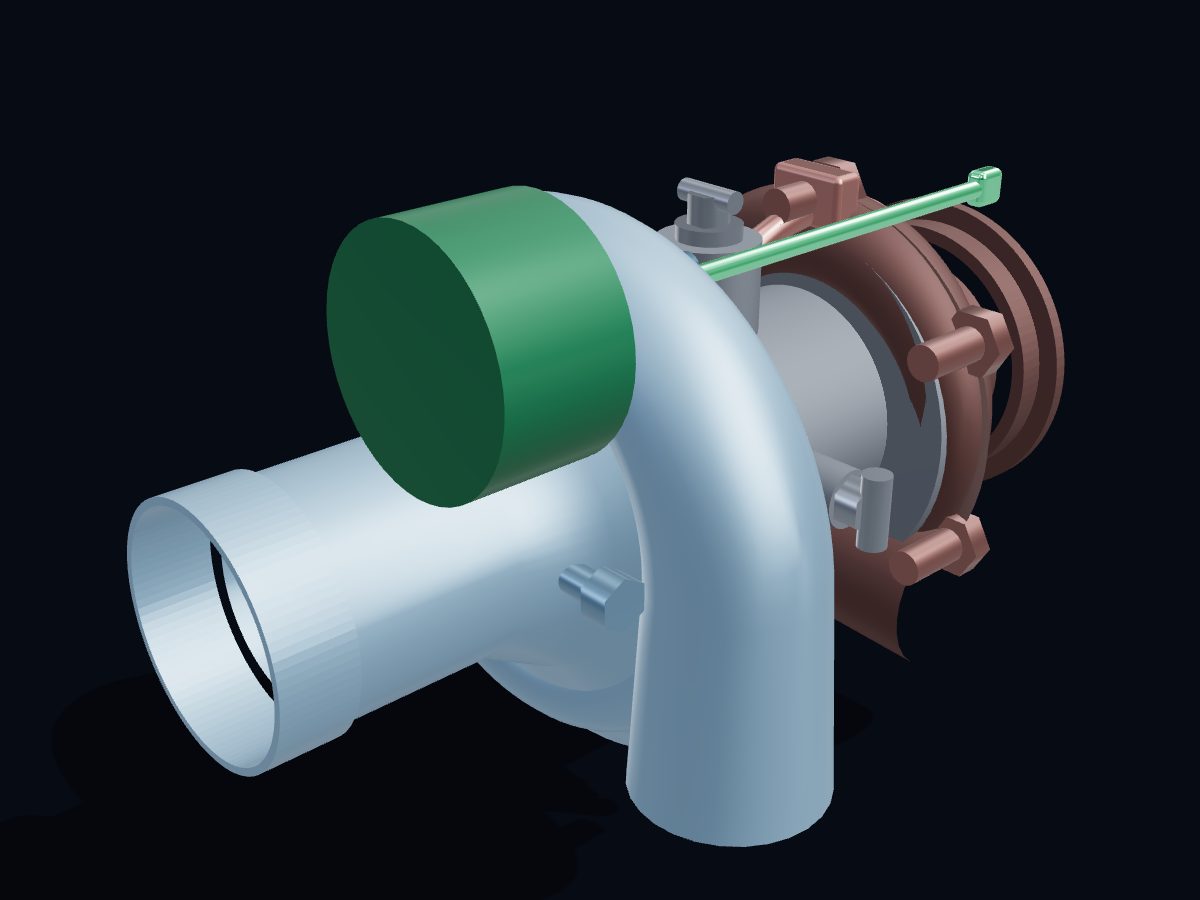 Turbocharger
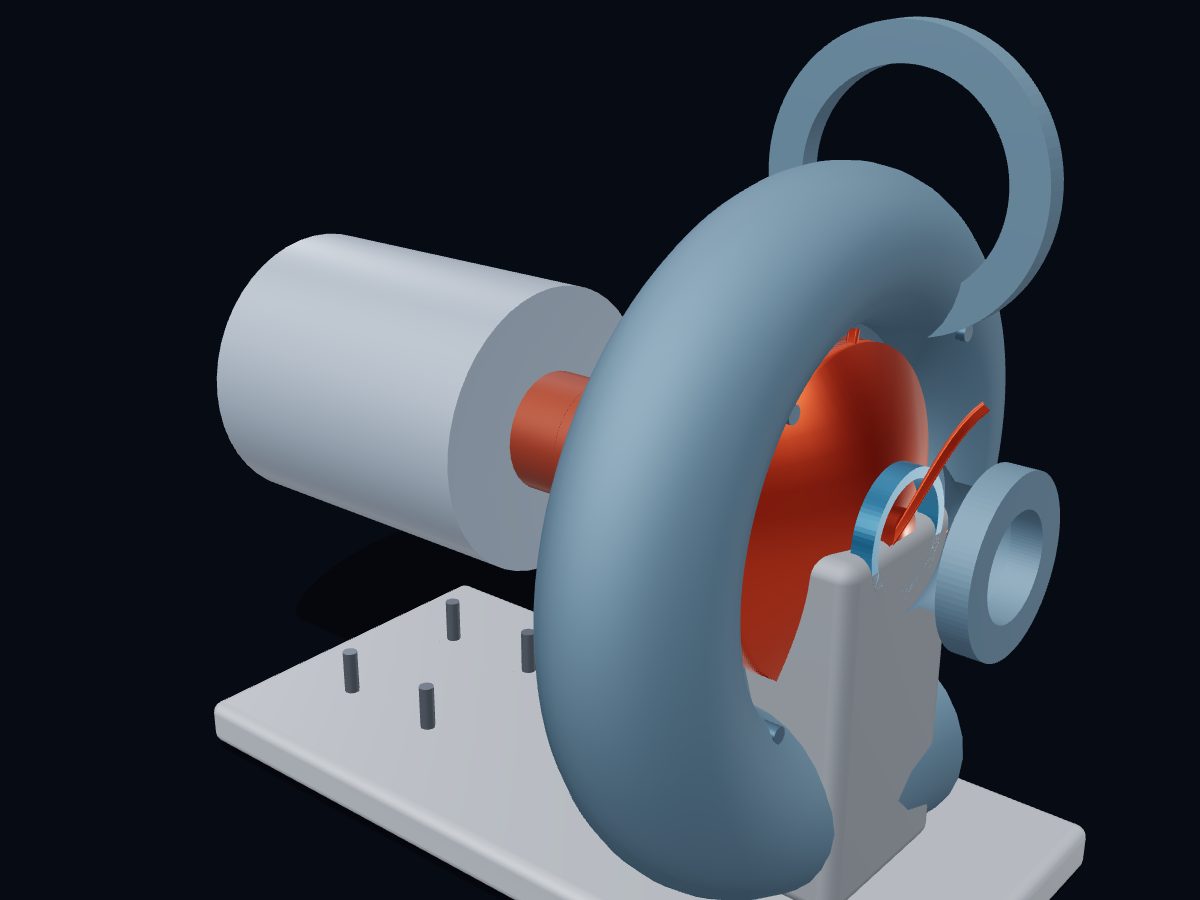 Centrifugal Pump
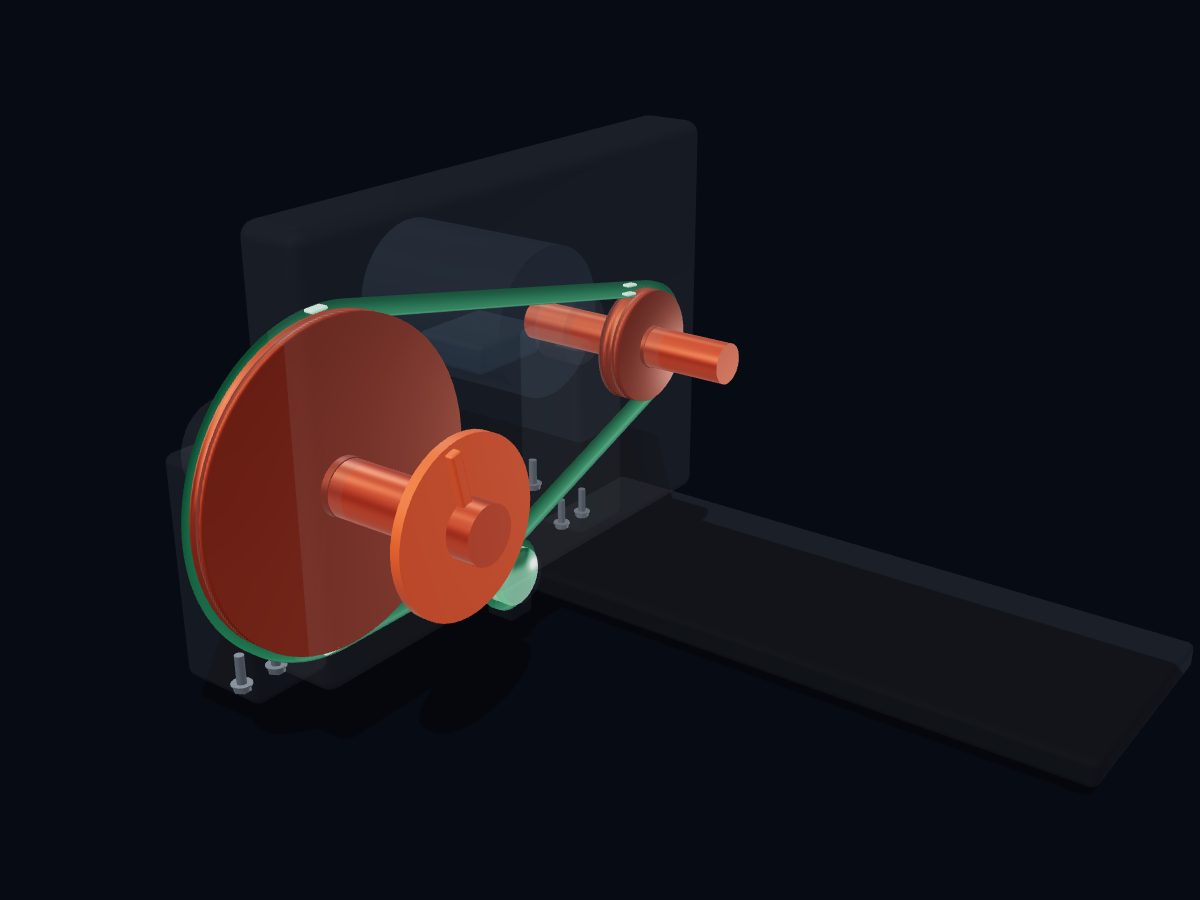 V-Belt Pulley Drive
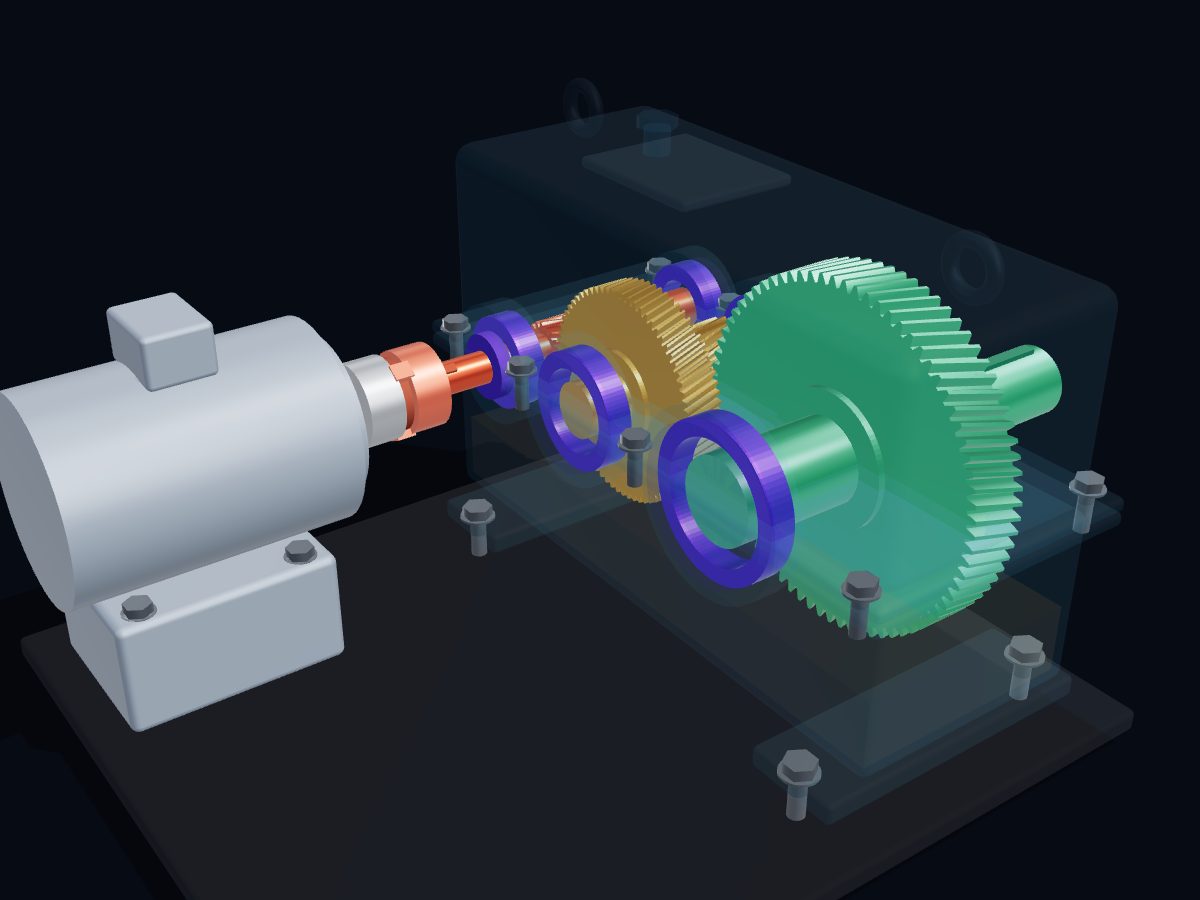 Helical Gear Reducer
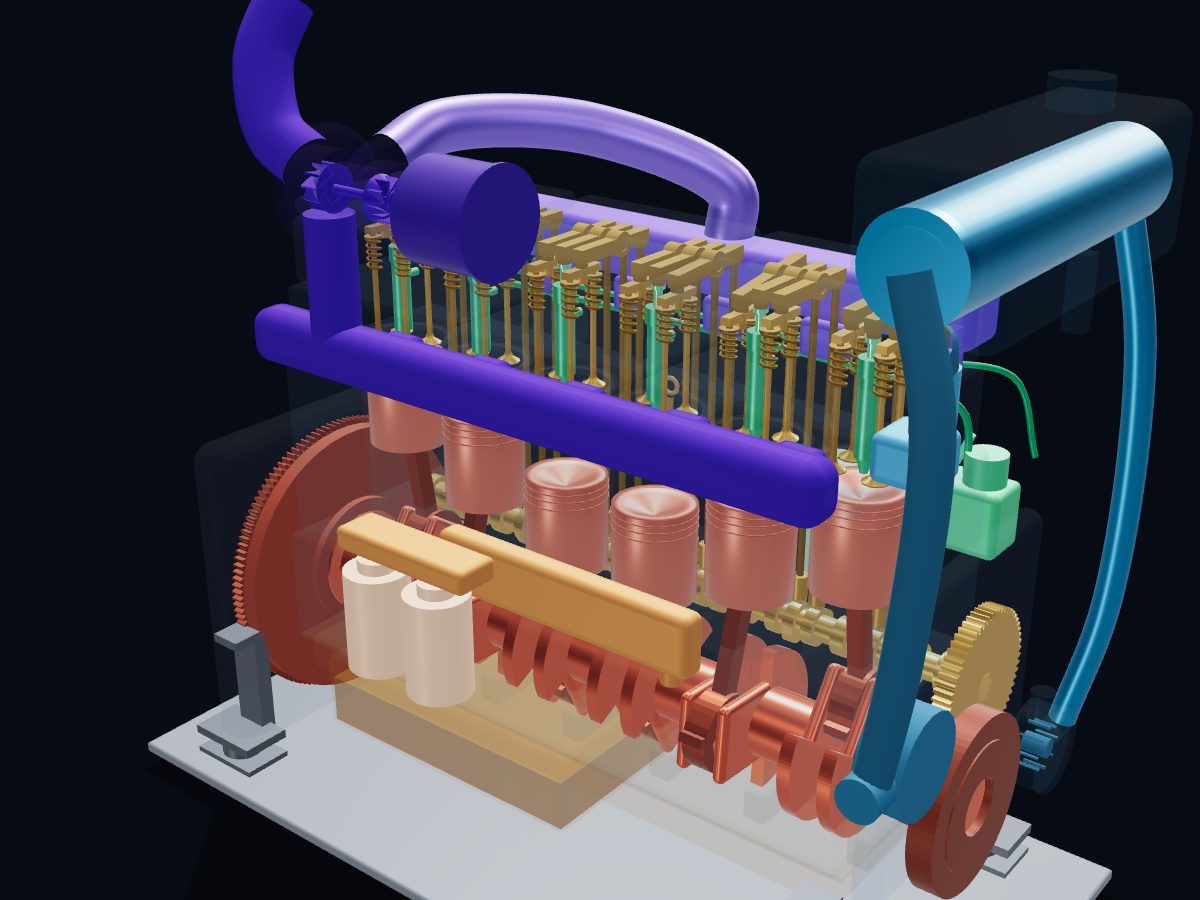 Marine Diesel Engine
 Plate Heat Exchanger
 Reciprocating Air Compressor
 Planetary Gearbox