By Parth Parmar, mechanical design engineer · 62 pieces, 34 parts · Updated
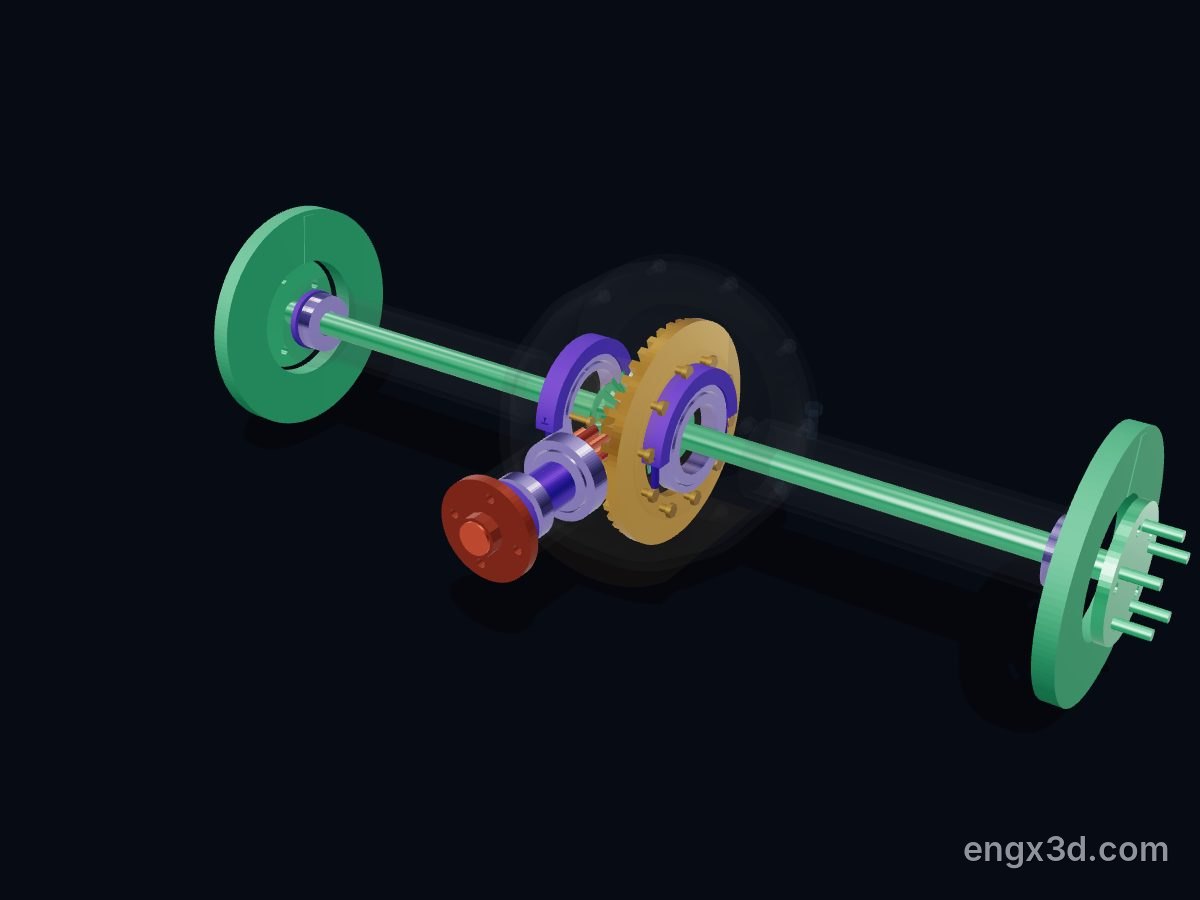
A differential lets a car's two driven wheels turn at different speeds while both are driven. The driveshaft pinion turns a ring gear bolted to the differential case; inside, spider gears drive both side gears and axles. Straight ahead they turn together; in a turn the spider gears spin so the outer wheel can go faster.
Single parts: scroll to the parts list. These are learning models, not a print kit: some parts touch or overlap and there are no fit tolerances.
Free for personal and educational use under CC BY-NC 4.0. Credit “Engine-X by Parth Parmar (engx3d.com)” when you share or remix it. Don’t sell the files or prints. For commercial use, get in touch. Every file carries the Engine-X mark and a hidden digital fingerprint that identifies it.
Key facts
Machine
Rear axle · open differential · 41 : 11 = 3.73 : 1 final drive
Parts modeled
62 named parts in 5 systems (34 different parts to download)
Model size
1176 × 336 × 444 mm (real scale)
Formats
GLB (glTF 2.0) 4.2 MB, STL 2.9 MB, USDZ for iPhone AR, ZIP of part STLs 0.4 MB
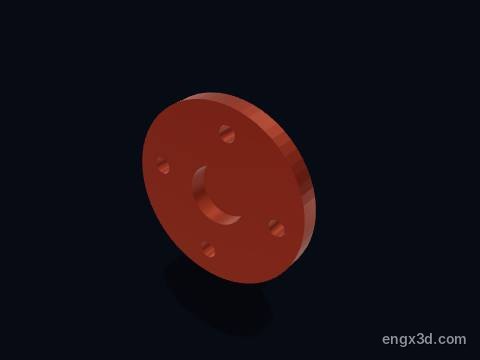
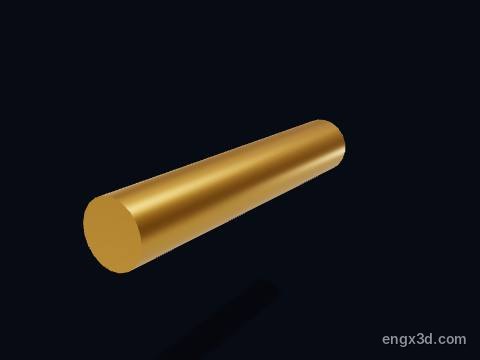
Every part with a picture, what it does and its own STL file: drive pinion (11 teeth), pinion flange, pinion nut, differential case, ring gear (41 teeth), ring gear bolt, cross shaft, cross shaft lock bolt and more. Open any part in the live 3D atlas to see where it sits and how it moves. A part used several times (valves, bolts) is shown once with its count.
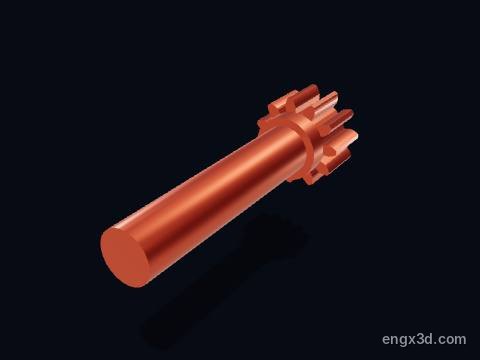
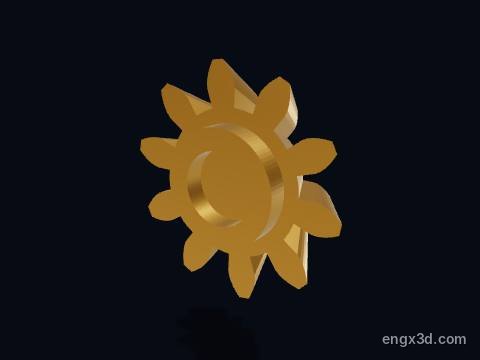
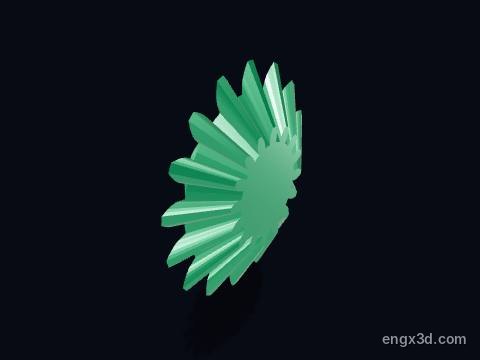
The drive pinion, the small gear on the end of the driveshaft. Its 11 teeth drive the 41-tooth ring gear, so the driveshaft turns 3.73 times for every turn of the wheels: the final drive ratio.
More about this part
In a real axle the teeth are curved (hypoid) and the pinion sits below the centre of the ring gear, which lets the driveshaft and the car floor sit lower and makes the mesh quieter.
The model draws straight teeth on centre so the mesh is easy to see.
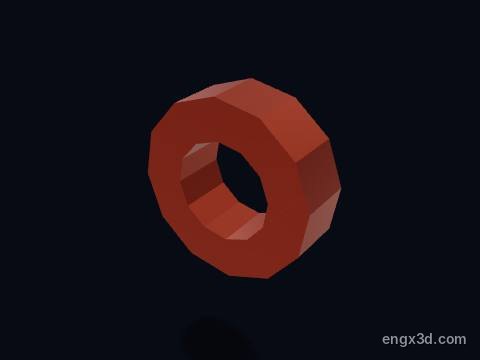
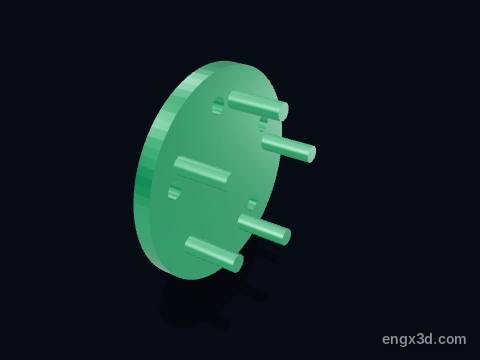
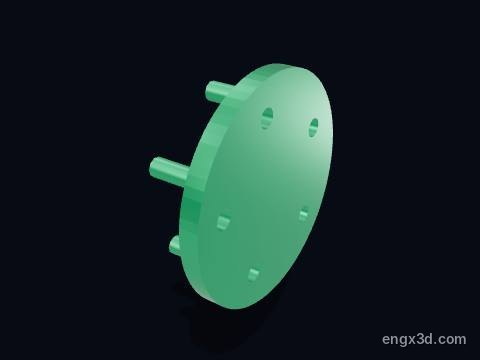
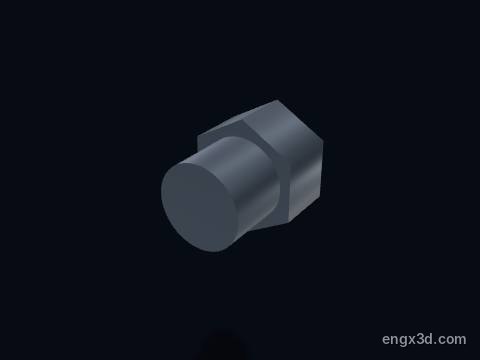
The pinion nut is the large nut on the end of the drive pinion shaft. It holds the flange on and, through the crush sleeve, sets the pinion bearing preload.
The differential case (carrier) holds the spider gears and side gears and turns with the ring gear. It is bolted to the ring gear and turns with it. Inside it the cross shaft holds the spider gears, and the two side gears sit in its bores. Drawn see-through so the gears inside stay visible.
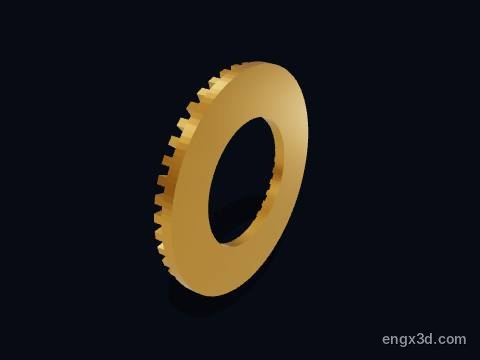
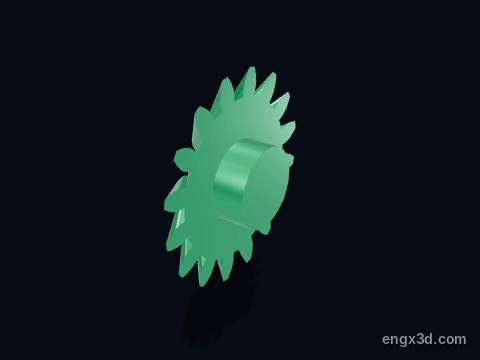
The ring gear (crown wheel), 41 teeth, bolted to the differential case. It turns the drive through 90°, from the lengthwise driveshaft to the crosswise axles, and slows it down 3.73 times, which multiplies the torque by the same factor.
More about this part
"8.8-inch" axles are named after the ring gear diameter.
Ring and pinion are made and lapped as a matched pair and must be replaced together.
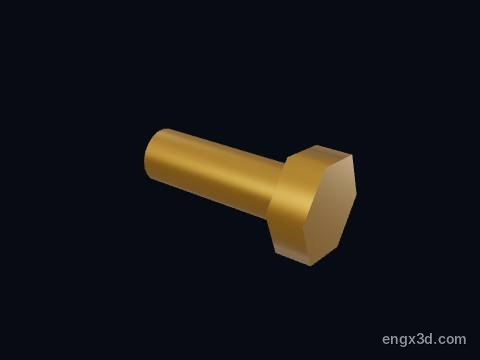
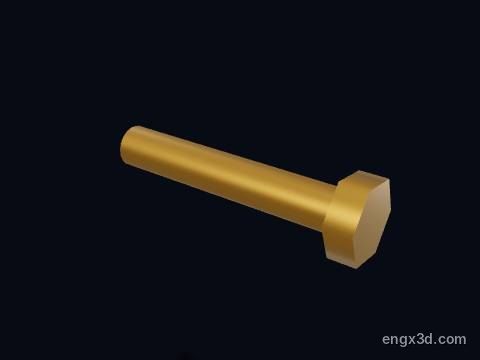
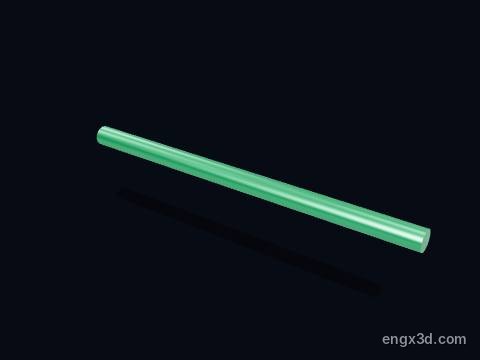
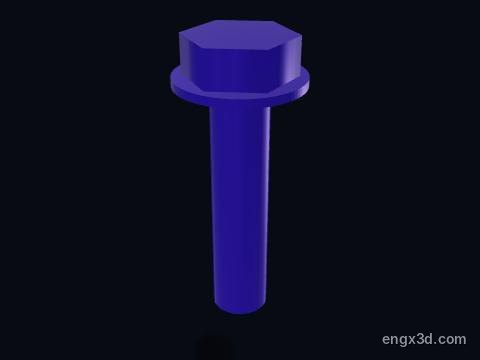
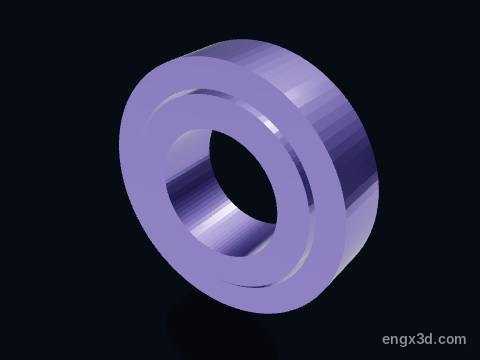
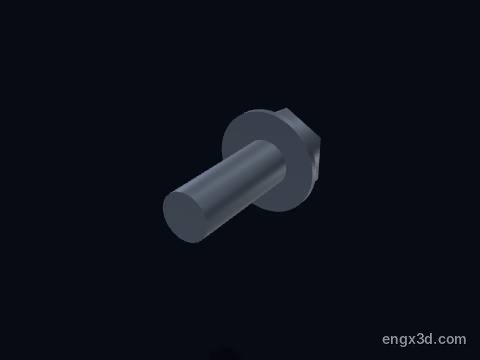
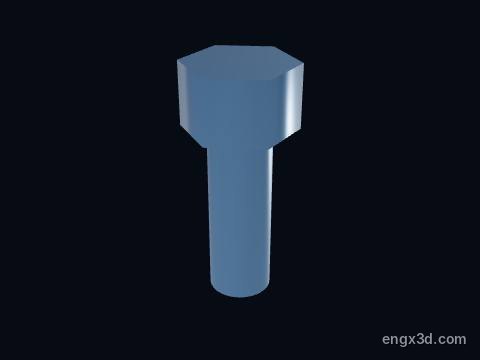
A ring gear bolt fixes the ring gear to the differential case. Ten of these clamp the ring gear to the differential case flange; they carry the full axle torque, so they are high-grade and torqued with thread locker.
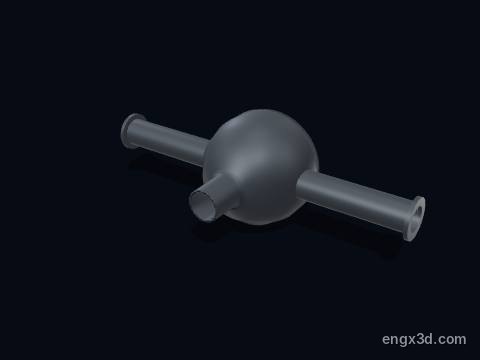
A spider (pinion) gear, one of two on the cross shaft inside the case. Driving straight they do not spin at all: they just carry both side gears round with the case. In a turn they spin on the cross shaft and let one side gear run faster and the other slower by the same amount.
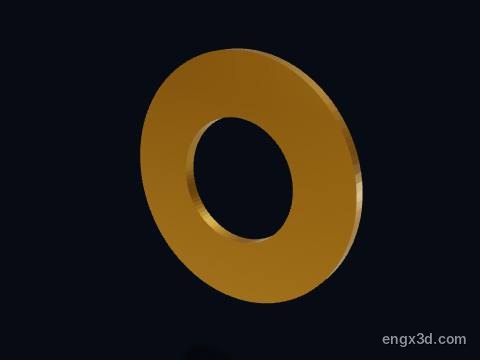
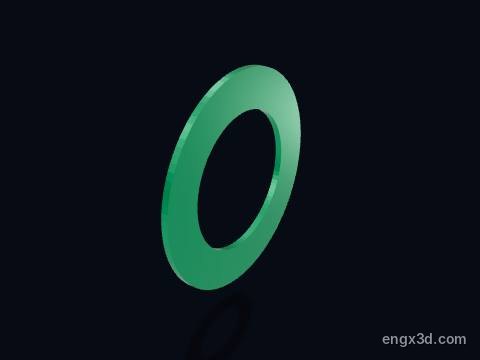
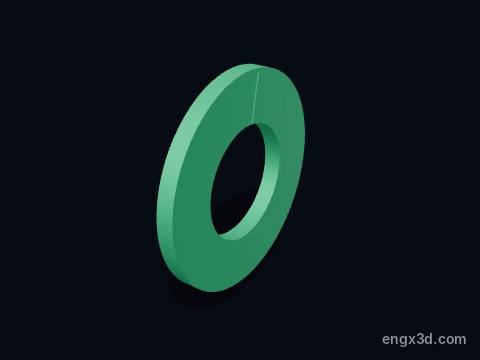
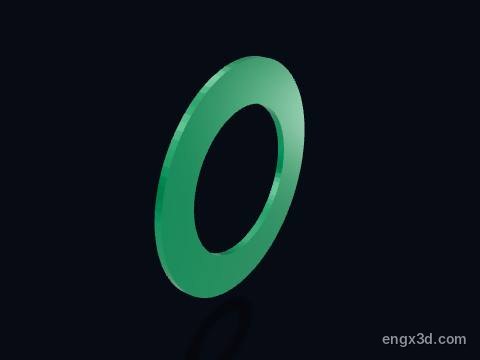
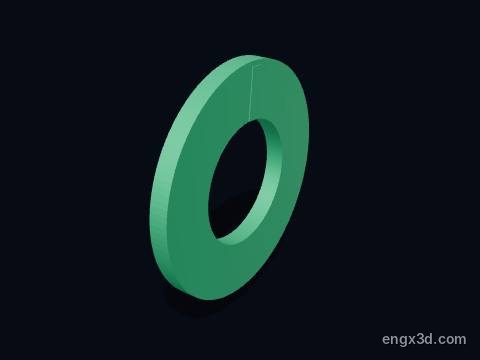
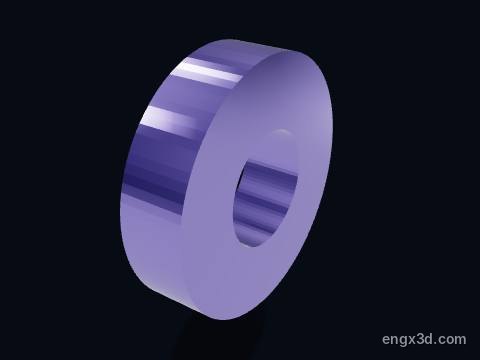
A thrust washer behind a spider or side gear. These hard washers take the gears' thrust against the inside of the case and set the backlash of the small gears.
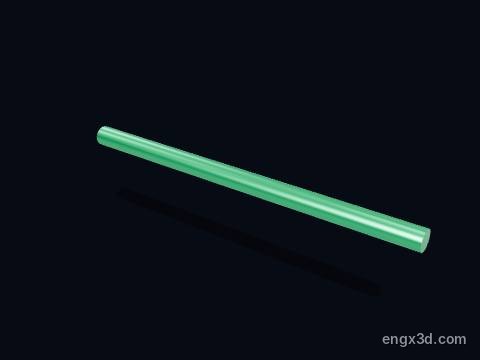
An axle shaft (half shaft) carries drive from a side gear out to one wheel. Its inner end is splined into a side gear; its outer end carries the wheel flange. It turns at exactly the speed of its wheel.
A side gear drives one axle shaft from the spider gears. Each axle shaft is splined into one side gear; the spider gears drive both side gears and so share the torque equally between the two wheels.
More about this part
Because the torque is shared equally, an open differential can only send to the wheel with grip as much torque as the slipping wheel can take: that is why one wheel spins on ice.
A thrust washer behind a spider or side gear. These hard washers take the gears' thrust against the inside of the case and set the backlash of the small gears.
A brake rotor (disc) turns with the wheel flange at the end of each axle. It is drawn here mainly to show each wheel's speed: watch them turn at different speeds in the turns.
Carrier and pinion bearings, bearing caps, crush sleeve, axle bearings and seals.
Carrier bearing ×2
A carrier bearing, one of two tapered roller bearings that hold the differential case in the housing. Shims or adjusters behind them set the ring gear backlash and the bearing preload.
A bearing cap clamps one carrier bearing into the axle housing. Two caps, each bolted down with two bolts, clamp the carrier bearings into the housing. They are machined together with the housing, so each must go back in its own place and the same way round.
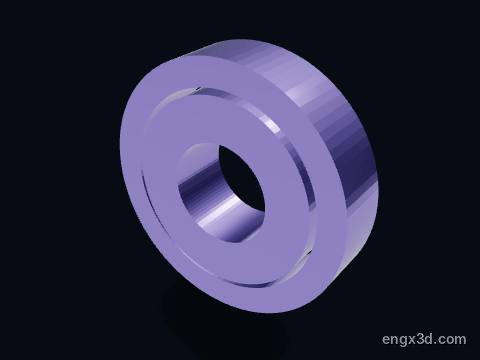
A pinion bearing supports the drive pinion shaft in the axle housing. Two tapered roller bearings carry the pinion shaft: the larger head bearing next to the gear and the smaller tail bearing near the flange. They take the heavy thrust the gear teeth push along the pinion.
A pinion bearing supports the drive pinion shaft in the axle housing. Two tapered roller bearings carry the pinion shaft: the larger head bearing next to the gear and the smaller tail bearing near the flange. They take the heavy thrust the gear teeth push along the pinion.
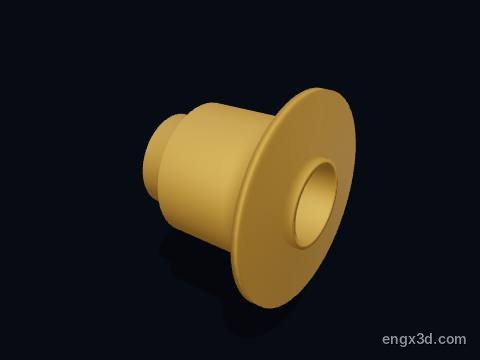
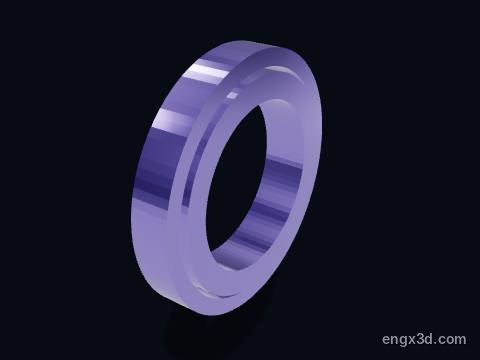
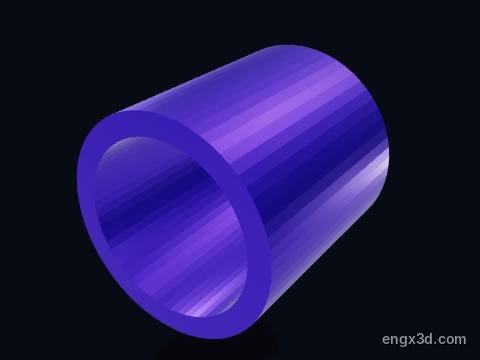
The crush sleeve (collapsible spacer) between the pinion bearings. Tightening the pinion nut squashes it slightly until the bearings have the right preload.
The pinion seal, a lip seal where the pinion shaft leaves the housing. It keeps gear oil in and road dirt out; a leaking pinion seal is one of the most common axle repairs.
The axle housing (banjo housing): the centre section that holds the differential and the two tubes that carry the axle shafts. It also carries the weight of the back of the car through the springs.
More about this part
Drawn see-through so the gears inside stay visible.
The oil fill plug closes the hole used to fill the axle with gear oil. The axle is filled until oil just runs out of this hole, which sets the right level.
The axle breather (vent) is a small vent on top of the axle housing. As the axle warms up it lets air out so pressure does not push oil past the seals.
Is the car differential 3D model free to download?
Yes. The car differential 3D model is free for personal and educational use under CC BY-NC 4.0: credit "Engine-X by Parth Parmar (engx3d.com)". Selling the files or prints, or other commercial use, needs written permission.
Which file formats is the car differential 3D model in?
GLB (glTF 2.0) with colours and named parts, STL in millimetres (Z-up) for CAD, slicers and 3D printing, USDZ for AR on iPhone, and a ZIP with all 34 parts as separate STL files.
How many parts does the car differential 3D model have?
62 named pieces in 5 systems (drive pinion, ring gear & case, axles & side gears, bearings & seals, housing & oil). Repeated pieces such as bolts are folded together, which leaves 34 different parts, each one downloadable on its own.
Can I 3D print the car differential model?
Yes, download the STL (whole machine or single parts) and open it in your slicer. It is a learning model at real scale, not a print kit: some parts touch or overlap and there are no fit tolerances, so scale it and print parts one by one.
How do I see the car differential in AR on my phone?
Tap "View in your room" on this page. Android opens Google Scene Viewer and iPhone opens AR Quick Look, both without an app, and you can place the model at real size on the floor or a table.
Can I see the car differential working in 3D?
Yes. Tap "Play live 3D here" or open the Engine-X atlas (engx3d.com/atlas#m=differential): it runs in the browser with true motion, and you can explode it, cut it open and X-ray it.
How to credit or cite this model
Credit line: Car differential 3D model, Engine-X by Parth Parmar (engx3d.com)
Citation: Parmar, P. (2026). Car differential 3D model [3D model, CC BY-NC 4.0]. Engine-X. https://engx3d.com/3d-models/car-differential
Used this model?
For a class, a project, a print or a video? Tell us how it went. With your OK, we may feature your work here.
 Open full screen →
 View in your room · AR