By Parth Parmar, mechanical design engineer · 111 pieces, 44 parts · Updated
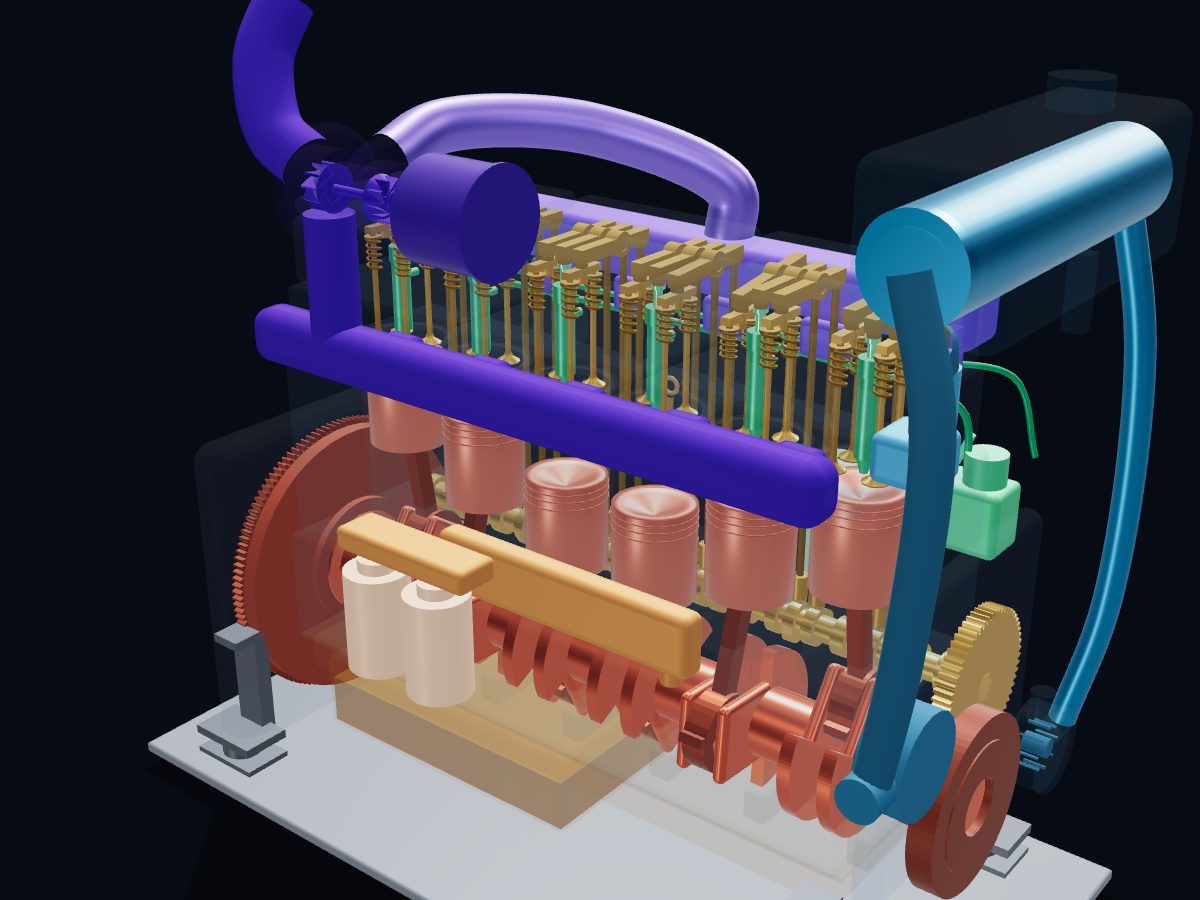
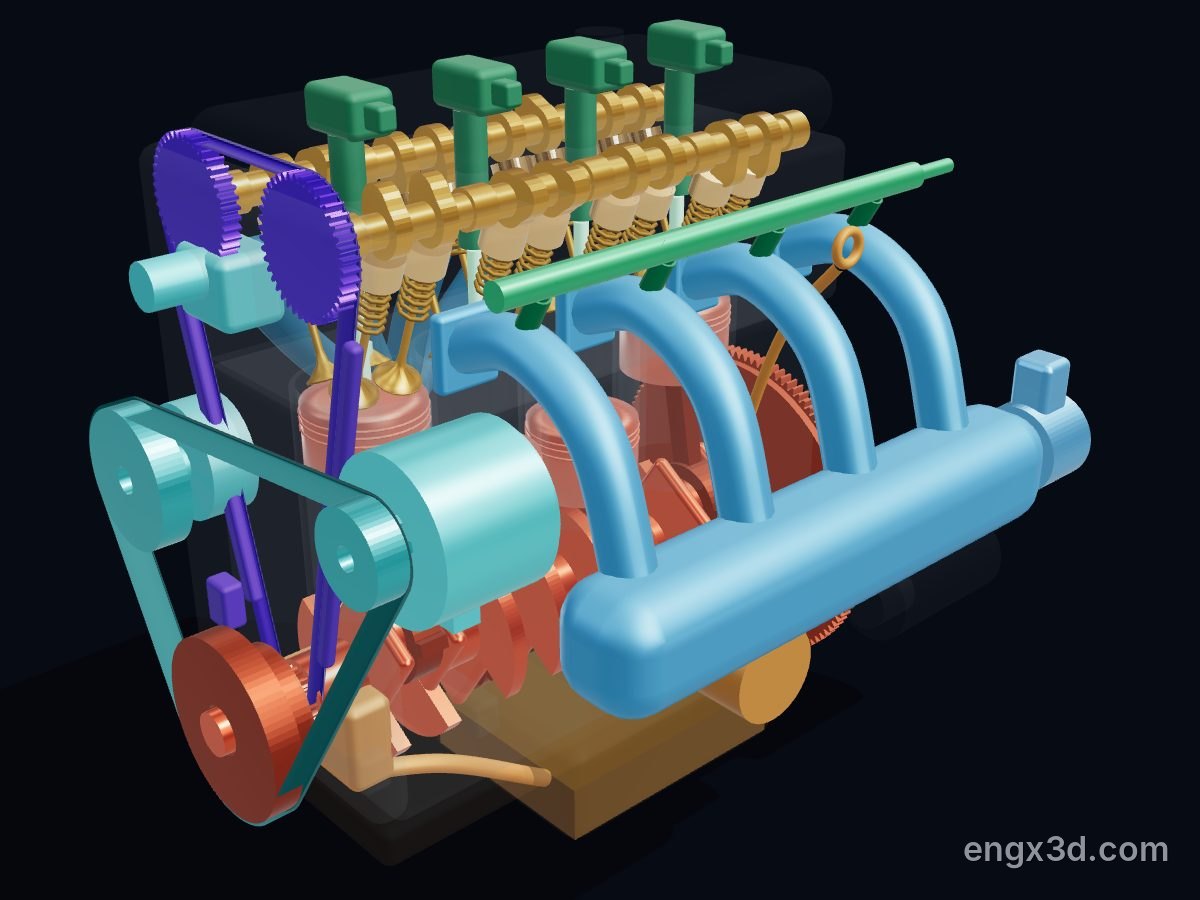
A car engine burns a mix of petrol and air inside its cylinders. Each burn pushes a piston down, and connecting rods turn the pistons’ up-and-down motion into rotation of the crankshaft. It works in four strokes, intake, compression, power and exhaust, while camshafts open the valves and spark plugs light the mixture.
Single parts: scroll to the parts list. These are learning models, not a print kit: some parts touch or overlap and there are no fit tolerances.
Free for personal and educational use under CC BY-NC 4.0. Credit “Engine-X by Parth Parmar (engx3d.com)” when you share or remix it. Don’t sell the files or prints. For commercial use, get in touch. Every file carries the Engine-X mark and a hidden digital fingerprint that identifies it.
Key facts
Machine
Inline-4 petrol · 2.0 L · DOHC 16-valve · firing order 1-3-4-2
Parts modeled
111 named parts in 8 systems (44 different parts to download)
Model size
645 × 590 × 558 mm (real scale)
Formats
GLB (glTF 2.0) 6.9 MB, STL 5.3 MB, USDZ for iPhone AR, ZIP of part STLs 0.9 MB
Every part with a picture, what it does and its own STL file: crankshaft, crankshaft sprocket, crankshaft pulley, flywheel, piston, piston pin, connecting rod, intake camshaft and more. Open any part in the live 3D atlas to see where it sits and how it moves. A part used several times (valves, bolts) is shown once with its count.
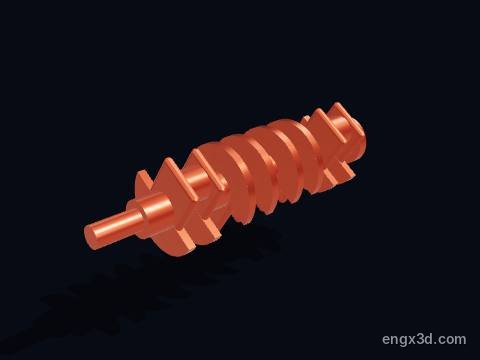
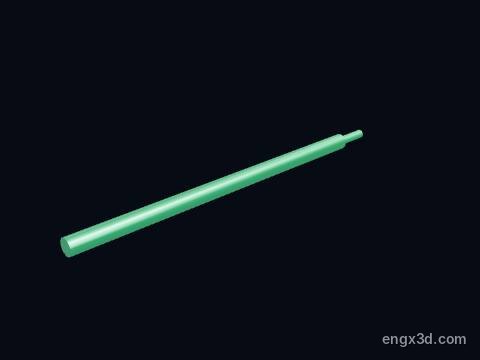
The crankshaft turns the up-and-down motion of the four pistons into rotation. Its four throws sit at 180°: throws 1 and 4 point one way, 2 and 3 the other, so two pistons rise while two fall and a cylinder fires every half turn.
More about this part
The 86 mm stroke is twice the crank throw radius of 43 mm.
Counterweights opposite each throw balance the rotating mass of the crankpins and rod big ends.
An inline-four is not fully balanced: a shake at twice crank speed remains, so larger fours often add two balance shafts.
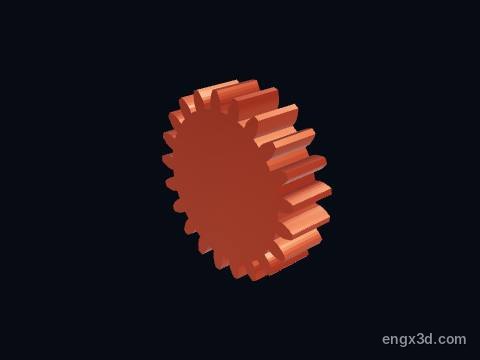
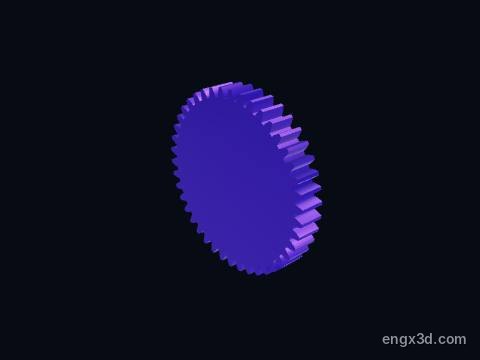
The crankshaft sprocket drives the timing chain from the front of the crankshaft. It has half as many teeth as each camshaft sprocket, so the camshafts turn once for every two crankshaft turns.
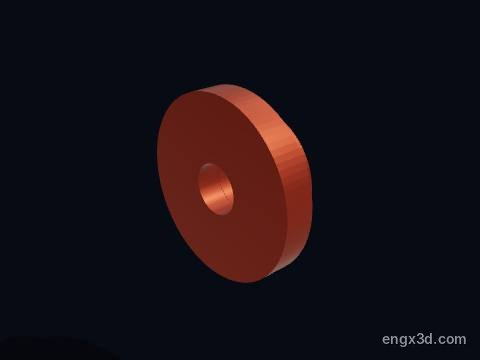
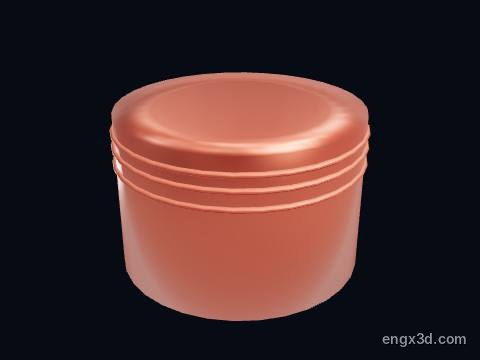
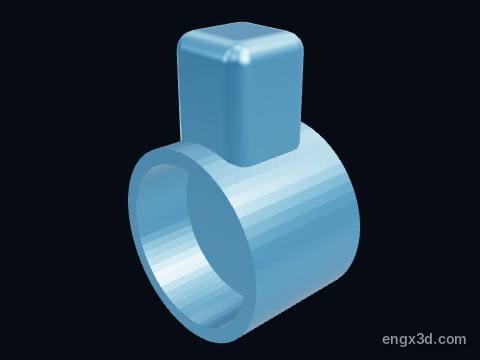
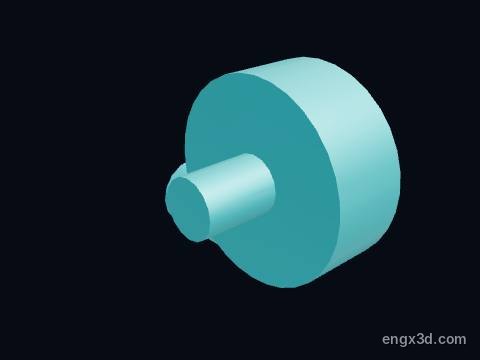
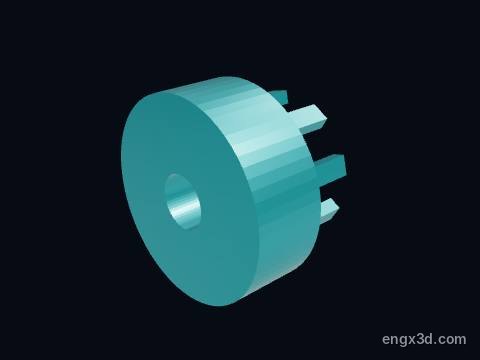
The crankshaft pulley (harmonic balancer) drives the accessory belt from the front of the crankshaft. A rubber ring between its hub and outer ring damps the twisting vibration of the crankshaft.
More about this part
Its outer ring often carries the timing marks used to check ignition timing.
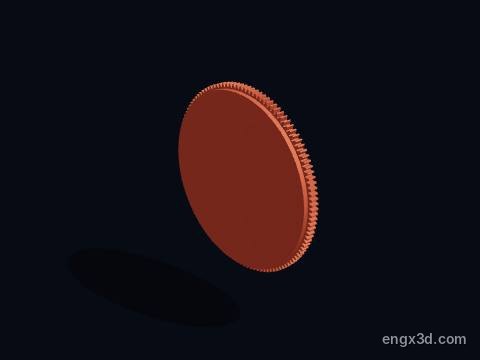
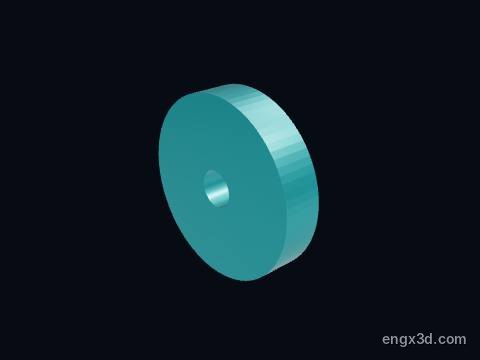
The flywheel bolts to the rear of the crankshaft. Its mass smooths out the four power pulses per two turns, it carries the clutch (or a flexplate for an automatic) and its toothed ring gear is what the starter motor turns.
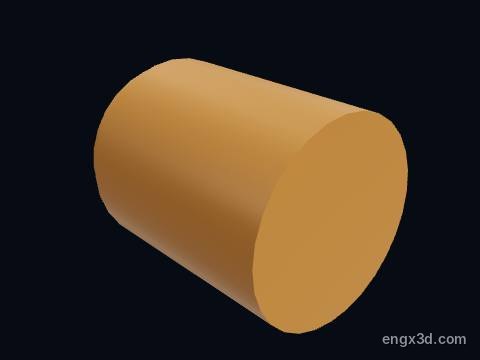
A piston slides in its 86 mm cylinder and takes the push of the burning fuel-air mixture on its crown. Three rings seal it to the bore: two compression rings hold the gas above, and an oil control ring scrapes the oil off the wall below.
More about this part
At 7,000 rpm the mean piston speed is about 20.1 m/s, and each piston stops and reverses direction 233 times a second.
Valve reliefs cut into the crown give the open valves room near the top of the stroke.
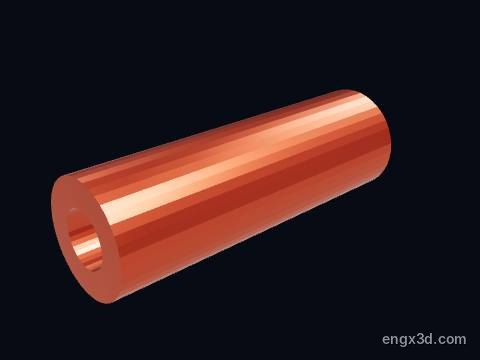
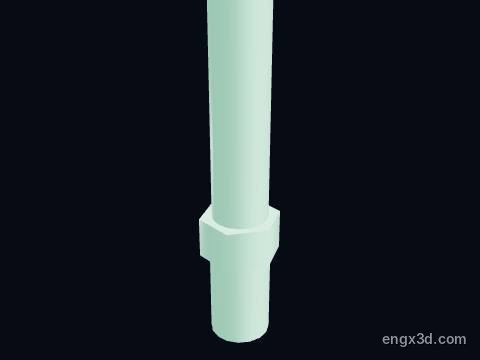
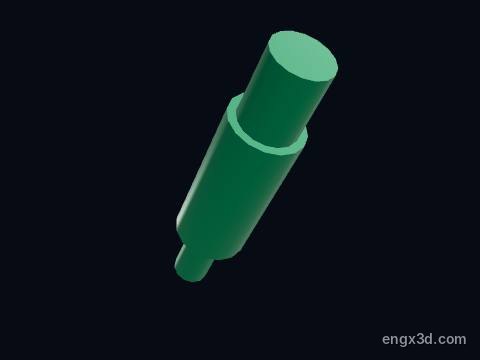
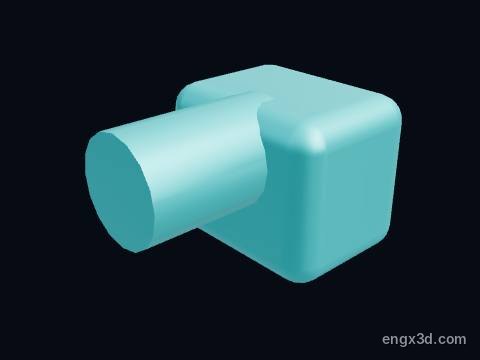
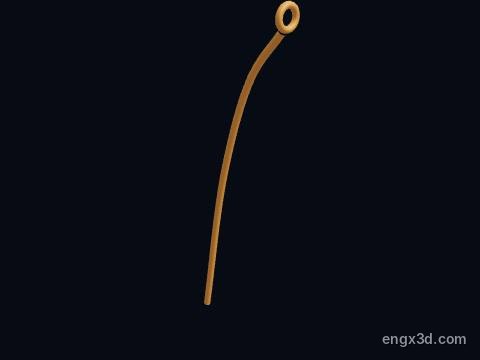
The piston pin (wrist pin, gudgeon pin) links the piston to the small end of the connecting rod. It lets the rod swing from side to side as the crank turns while the piston moves straight up and down.
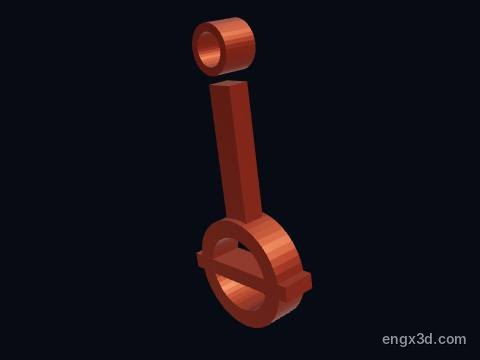
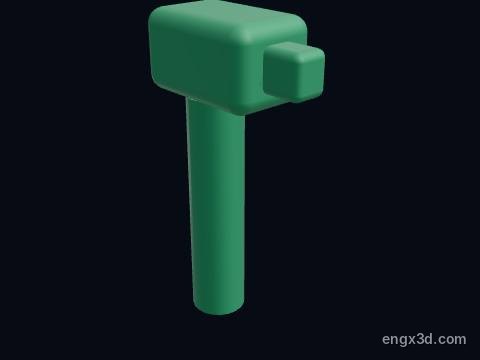
A connecting rod links one piston to its crankpin, about 140 mm between centres in this model. It pushes the crank round on the power stroke and pulls the piston back down on the intake stroke, so it works in both compression and tension.
More about this part
The big end is split so it can be bolted round the crankpin over a pair of plain bearing shells.
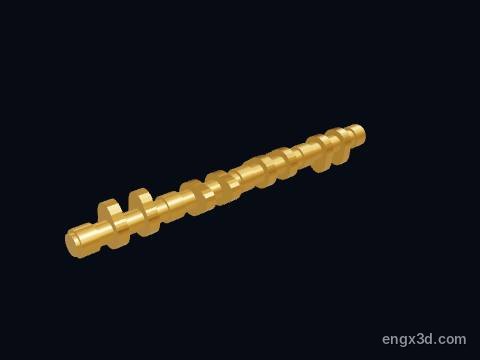
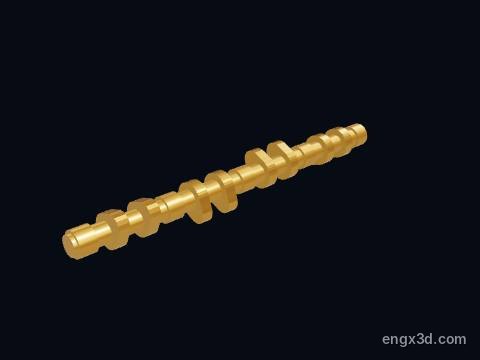
A camshaft opens the valves on one side of the engine: the intake camshaft works the eight intake valves and the exhaust camshaft the eight exhaust valves. It turns at half crankshaft speed and has one lobe per valve.
More about this part
DOHC means double overhead camshaft: two camshafts in the head, one for each row of valves.
Many engines add a variable cam phaser to the intake sprocket, which shifts the valve timing with engine speed.
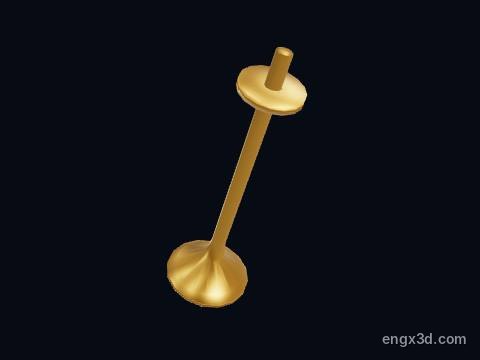
An intake valve opens to let the fuel-air mixture into a cylinder during the intake stroke, then closes and seals the cylinder for compression and combustion. Each cylinder has two, so the air has more open area to flow through.
More about this part
Intake valves are larger than exhaust valves: filling the cylinder is the harder job, while the exhaust is pushed out under pressure.
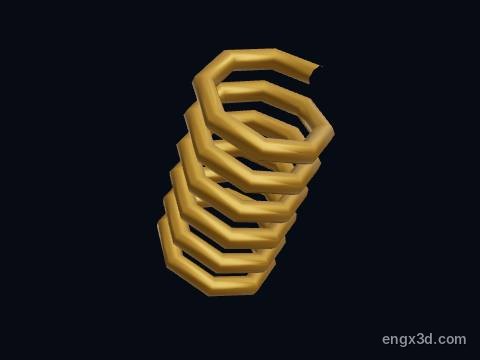
A valve spring closes its valve again after the cam lobe has passed. It must be stiff enough to keep the valve following the cam at the engine's highest speed, or the valve "floats" and can hit the piston.
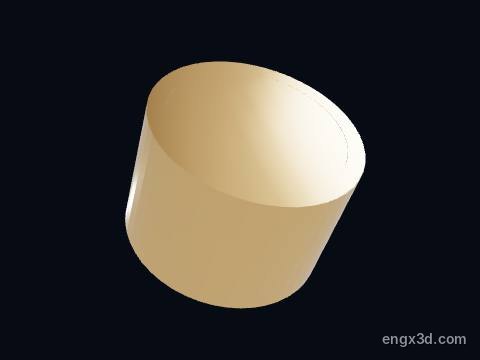
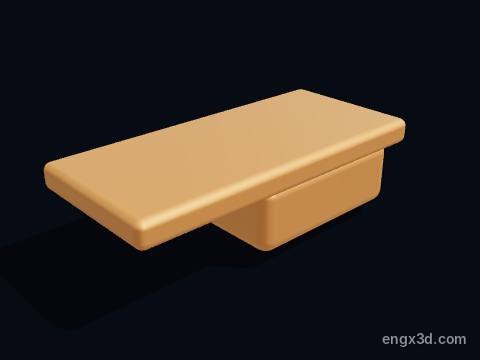
A bucket tappet sits on top of a valve stem directly under the camshaft. The cam lobe presses on it and pushes the valve open; the bucket takes the side load so the valve stem only moves straight.
More about this part
The valve clearance is set by the tappet or a shim on it; too little clearance and the valve cannot close fully and burns.
An exhaust valve opens near the end of the power stroke to let the burnt gas out of a cylinder. It runs much hotter than an intake valve, so it is made of heat-resistant steel and cools mainly through its seat.
More about this part
Some high-output engines use sodium-filled exhaust valve stems to carry heat away from the valve head.
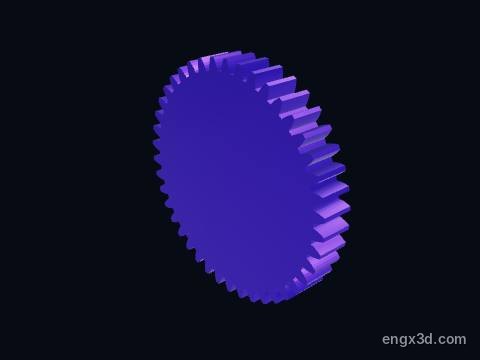
A camshaft sprocket bolts to the front of one camshaft and is driven by the timing chain. With twice the teeth of the crank sprocket it turns the camshaft once for every two crankshaft turns, once per four-stroke cycle.
A camshaft sprocket bolts to the front of one camshaft and is driven by the timing chain. With twice the teeth of the crank sprocket it turns the camshaft once for every two crankshaft turns, once per four-stroke cycle.
The timing chain links the crankshaft sprocket to the two camshaft sprockets, so the valves always open in step with the pistons. If the timing slips, valves can hit the pistons in many engines.
More about this part
Older and many smaller engines use a toothed rubber timing belt instead, which needs replacing at a set interval; a chain runs in oil and usually lasts the life of the engine.
A rattle at cold start is the classic sign of a worn chain or a weak tensioner.
The chain tensioner arm presses on the slack side of the timing chain to keep it tight. Oil pressure and a spring push its plunger out as the chain wears and stretches.
The chain guide is a fixed plastic-faced rail along the tight side of the timing chain. It stops the long run of chain from flapping between the sprockets.
A spark plug fires a spark across its gap to light the compressed fuel-air mixture just before the piston reaches the top of the compression stroke. This engine has one per cylinder, in the centre of the combustion chamber.
More about this part
Typical gaps are around 0.7 to 1.1 mm; iridium or platinum tips last up to about 100,000 km.
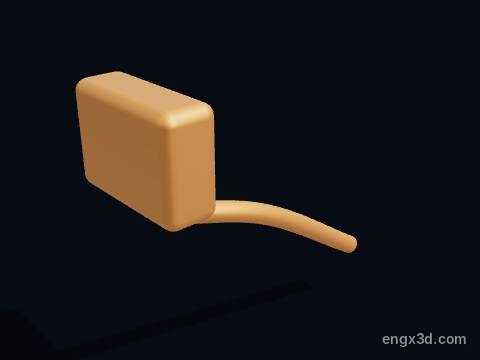
An ignition coil sits directly on top of each spark plug (coil-on-plug). The engine computer switches its primary current off, and the collapsing magnetic field makes the tens of thousands of volts the plug needs to spark.
More about this part
A misfire that moves when a coil is swapped to another cylinder shows the coil is the faulty part.
A fuel injector sprays petrol into one intake port, aimed at the back of the intake valves. The engine computer opens it for a few milliseconds each cycle and controls the amount of fuel by how long it stays open.
More about this part
This is port fuel injection; direct-injection engines spray into the cylinder itself at much higher pressure.
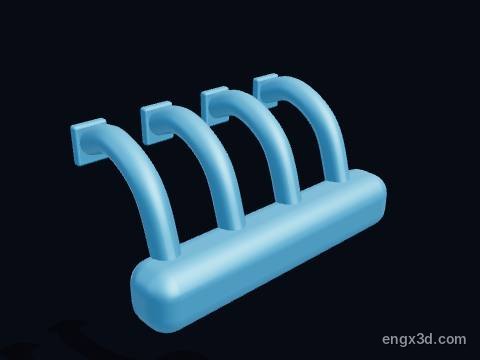
The intake manifold carries air from the throttle body to the four intake ports. Its plenum feeds four runners, one per cylinder, and the runner length is tuned to help the cylinders fill.
The throttle body holds the throttle plate, the valve that sets how much air the engine can breathe. Pressing the accelerator opens it; in modern cars an electric motor moves it on the engine computer's command (drive-by-wire).
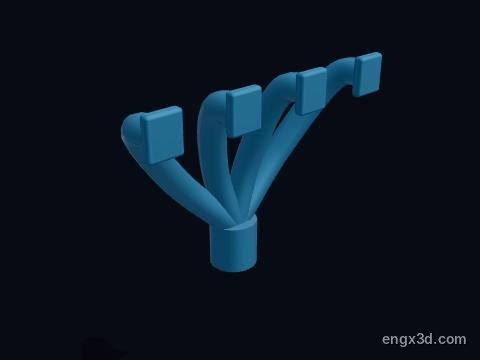
The exhaust manifold collects the hot exhaust gas from the four exhaust ports into one pipe. Its four pipes join in a collector that leads to the catalytic converter.
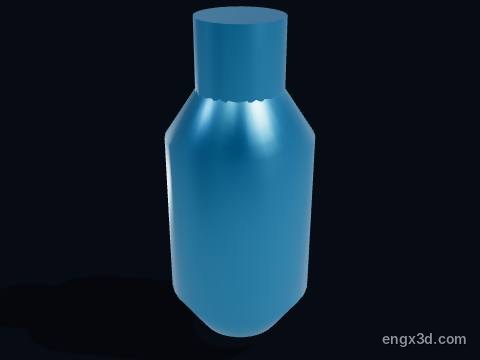
The catalytic converter cleans the exhaust gas: its precious-metal coated honeycomb turns carbon monoxide, unburnt fuel and nitrogen oxides into carbon dioxide, water and nitrogen. It only works when hot and when the engine runs at the right air-fuel ratio.
The oxygen sensor (lambda sensor) measures the oxygen left in the exhaust gas. The engine computer uses its signal to keep the air-fuel ratio right, about 14.7 parts air to one of petrol by mass.
The water pump (coolant pump) is a small centrifugal pump that drives the coolant round the block, the head and the radiator. The accessory belt turns it through its pulley.
More about this part
A wet trail from the weep hole under the pulley is the usual sign that its shaft seal is going.
The thermostat housing holds the thermostat, a wax valve that stays shut until the coolant is warm (around 80 to 90 °C) and then opens the way to the radiator, so the engine warms up quickly and then holds its temperature.
The alternator makes the car's electricity while the engine runs: it charges the battery and powers the ignition, injectors, lights and electronics. The accessory belt turns it about two to three times faster than the crankshaft.
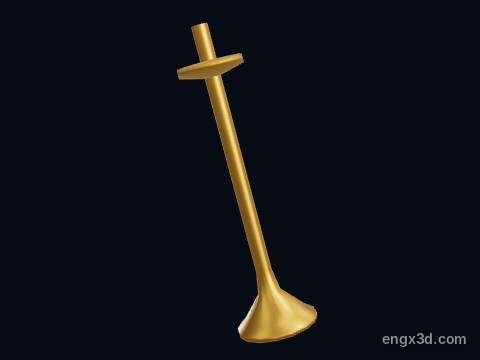
The alternator pulley is the small pulley the accessory belt turns on the alternator shaft. Its small diameter is what makes the alternator spin faster than the crankshaft.
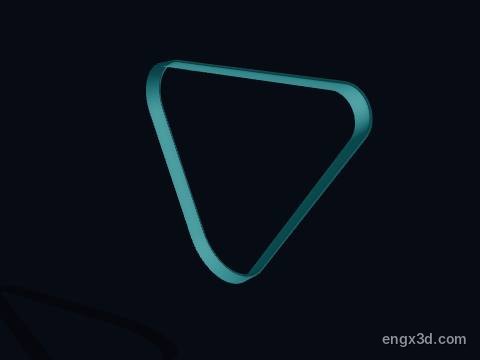
The accessory belt (serpentine belt, drive belt) runs from the crankshaft pulley round the alternator and water pump pulleys. A squeal at start-up or in tight turns usually means the belt is worn or loose.
The oil pump pushes engine oil under pressure through the oil filter to the crankshaft and camshaft bearings and the chain tensioner. It is driven from the crankshaft and draws oil up from the sump.
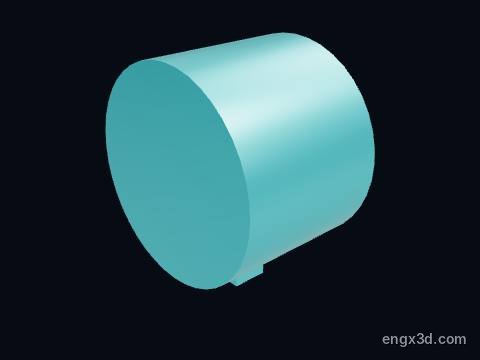
The oil filter cleans the engine oil of metal particles and combustion soot before it reaches the bearings. It is a spin-on cartridge, changed with the oil.
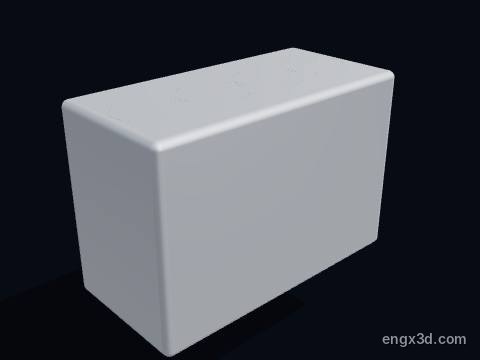
The cylinder block is the main casting of the car engine: it holds the four cylinders, the crankshaft and the coolant passages around the bores. This 2.0-litre block has four 86 mm bores in a row and carries the whole engine's load into the engine mounts.
More about this part
Most modern car blocks are cast aluminium with thin iron cylinder liners, which saves weight over an all-iron block.
Drawn see-through so the pistons and crankshaft stay visible.
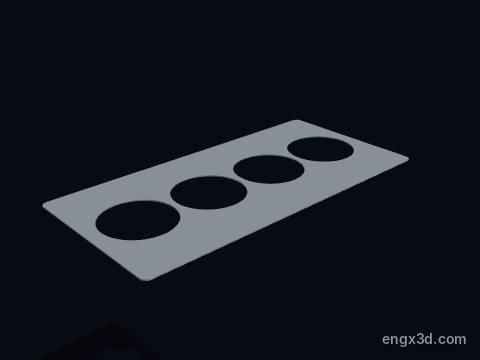
The head gasket seals the joint between the cylinder head and the block. It has to hold the combustion pressure in each bore and keep the coolant and the oil passages that cross the joint apart from each other.
More about this part
A blown head gasket lets coolant into the oil or the cylinders, or combustion gas into the coolant: white exhaust smoke, milky oil or a bubbling coolant tank are the classic signs.
The cylinder head closes the top of the four cylinders and carries the valves, both camshafts, the spark plugs and the intake and exhaust ports. Its pent-roof combustion chambers, one per cylinder, hold four valves each with the spark plug in the middle.
More about this part
Coolant runs through passages between the ports and around the spark plugs, where the head gets hottest.
Drawn see-through so the valve train stays visible.
The cam cover (valve cover, rocker cover) closes the top of the cylinder head over the two camshafts and keeps the oil splashed over the valve train inside. The ignition coils pass through it into the spark plug wells.
More about this part
A hardened cam cover gasket is one of the most common oil leaks on older engines.
The timing cover encloses the timing chain and sprockets at the front of the engine. It keeps the chain bathed in engine oil and keeps dirt out, and it carries the front crankshaft seal.
A main bearing cap bolts to the bottom of the block and clamps the crankshaft main bearing shells around one main journal. This engine has five: one between each pair of cylinders and one at each end.
More about this part
Caps are machined together with the block, so each one must go back in its own place and the same way round.
The starter motor cranks the engine to start it. When the key is turned it pushes a small pinion into the flywheel ring gear and spins the crankshaft until the engine fires.
Yes. The car engine 3D model is free for personal and educational use under CC BY-NC 4.0: credit "Engine-X by Parth Parmar (engx3d.com)". Selling the files or prints, or other commercial use, needs written permission.
Which file formats is the car engine 3D model in?
GLB (glTF 2.0) with colours and named parts, STL in millimetres (Z-up) for CAD, slicers and 3D printing, USDZ for AR on iPhone, and a ZIP with all 44 parts as separate STL files.
How many parts does the car engine 3D model have?
111 named pieces in 8 systems (crank train, camshafts & valves, timing chain, ignition & fuel, air & exhaust, cooling & accessory belt, lubrication, block & head). Repeated pieces such as bolts are folded together, which leaves 44 different parts, each one downloadable on its own.
Can I 3D print the car engine model?
Yes, download the STL (whole machine or single parts) and open it in your slicer. It is a learning model at real scale, not a print kit: some parts touch or overlap and there are no fit tolerances, so scale it and print parts one by one.
How do I see the car engine in AR on my phone?
Tap "View in your room" on this page. Android opens Google Scene Viewer and iPhone opens AR Quick Look, both without an app, and you can place the model at real size on the floor or a table.
Can I see the car engine working in 3D?
Yes. Tap "Play live 3D here" or open the Engine-X atlas (engx3d.com/atlas#m=carengine): it runs in the browser with true motion, and you can explode it, cut it open and X-ray it.
How to credit or cite this model
Credit line: Car engine 3D model, Engine-X by Parth Parmar (engx3d.com)
Citation: Parmar, P. (2026). Car engine 3D model [3D model, CC BY-NC 4.0]. Engine-X. https://engx3d.com/3d-models/car-engine
Used this model?
For a class, a project, a print or a video? Tell us how it went. With your OK, we may feature your work here.
 Open full screen →
 View in your room · AR